NJ Pest Guard Blog · Updated September 2026
Bed Bug Treatment in NJ: What to Expect
Short answer: bed bug treatment takes 4–6 weeks across 2–3 visits, costs $500–$1,500+, and works — if prep is done right and follow-ups happen. Here's the full process.
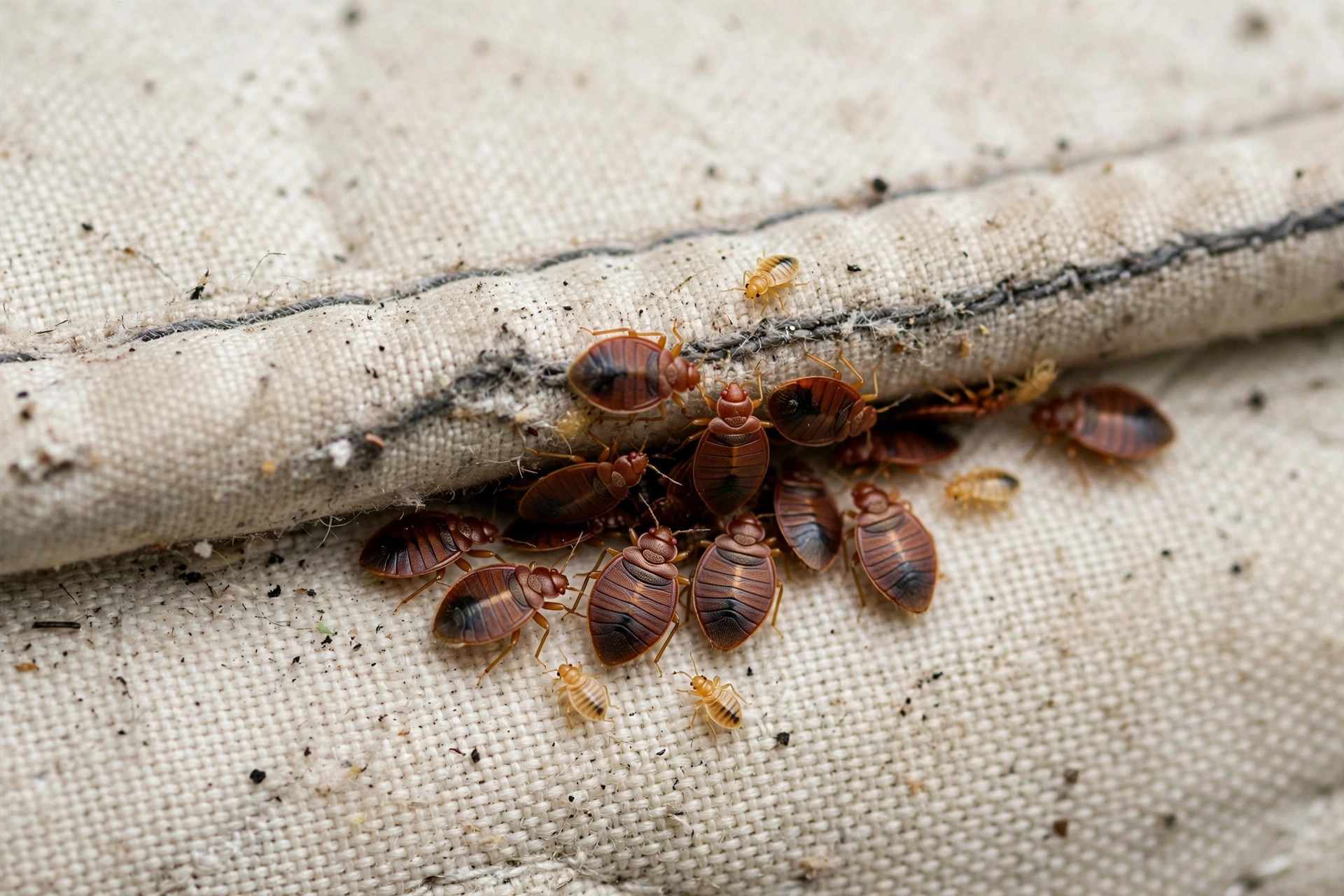
First: how to tell if it's actually bed bugs
- Rust-colored spots on sheets, pillowcases, and mattress seams — droppings that look like a marker bled through fabric.
- Shed skins and tiny white eggs tucked into mattress piping, box spring corners, and behind headboards.
- Live bugs — flat, reddish-brown, apple-seed-sized. Check seams with a flashlight at night.
- Bites in lines or clusters after sleeping, usually on arms and neck. (Not everyone reacts.)
- A sweet, musty odor in heavy infestations.
Don't spray store-bought foggers — they scatter bed bugs deeper into walls. About a third of "bed bug" calls we get in Paterson and Passaic turn out to be carpet beetles or fleas. A free inspection tells you for sure.
The treatment process, start to finish
Step 1 — Inspection (45–60 minutes). We check bedrooms, furniture, baseboards, and outlets, confirm activity, and give you a firm quote plus a prep checklist. No inspection, no honest quote.
Step 2 — Prep (before treatment day). See the checklist below. Treatment fails more often from bad prep than bad chemicals.
Step 3 — Treatment day (3–6 hours). Every harborage gets treated — mattress seams, box springs, bed frames, nightstands, baseboards, outlets — via heat, targeted chemicals, steam, or a combination.
Step 4 — Follow-ups (2 and 4 weeks out). Eggs hatch in 6–10 days and shrug off most chemicals, so follow-ups catch new nymphs before they breed. This is the step cheap companies skip — and why infestations "come back."
Think You Have Bed Bugs? Get a Free Inspection
We'll confirm it (or rule it out) and give you a firm quote — same-day service across North Jersey.
(973) 653-8456Tap to call nowYour prep checklist
- Strip all bedding; wash HOT, dry on highest heat 30+ minutes, then seal in bags. The dryer is your best weapon.
- Bag clothing from infested rooms; wash and heat-dry the same way.
- Declutter floors and under beds for baseboard access. Bag clutter instead of moving it room to room.
- Empty nightstands and dressers near the bed so drawers and frames can be treated.
- Vacuum mattress seams, box springs, and carpet edges; empty the vacuum into a sealed bag and take it outside immediately.
- Don't move infested furniture to other rooms or the curb — you'll seed a second infestation.
No need to empty the kitchen or toss the mattress. Keep sleeping in the bed — it keeps bugs coming to the treated zone instead of scattering.
Heat treatment vs. chemical treatment
Heat raises rooms to 120–140°F for hours, killing every life stage including eggs in one day and reaching voids sprays can't touch. Downsides: higher cost ($1,000–$1,500+), no residual protection, and heat-sensitive items must be removed. Best for severe infestations.
Chemical treatment uses targeted residuals on harborages plus dusts in wall voids, sometimes with steam on seams. More affordable ($500–$900 typical) with residual that keeps killing for weeks — but it needs 2–3 visits since eggs survive the first pass.
Our toughest North Jersey jobs — especially multi-unit buildings where bugs wander in from next door — often get both: heat for immediate knockdown, residuals for ongoing protection.
The NJ apartment factor
In Paterson, Passaic, and Clifton's dense apartment stock, bed bugs travel through wall voids and under doors — treating one unit while the next is infested is mopping with the tap running. Tenants: report in writing immediately; NJ landlords are generally responsible for eradication. Our landlord guide covers who pays. Landlords: treating adjacent units preventively beats treating the same building twice.
The bottom line
Bed bugs are beatable — we eliminate them weekly across Hackensack, Clifton, and the rest of North Jersey. Confirm with an inspection, prep properly, treat thoroughly, do the follow-ups. Call early — a one-bedroom job in month one costs a fraction of a whole-apartment infestation in month six.
Bed Bugs Don't Wait — Neither Should You
Free inspections, honest quotes, and follow-ups that finish the job across North Jersey.
(973) 653-8456Tap to call nowBed Bug Treatment FAQs
How do I know if I have bed bugs?
Rust-colored spots on sheets, shed skins in mattress seams, a sweet musty odor, and itchy welts in lines or clusters after sleeping. A professional inspection gives a definitive answer.
How long does bed bug treatment take in NJ?
The initial treatment takes 3–6 hours, but the full process spans 4–6 weeks: inspection, main treatment, then follow-up visits about two weeks apart to catch newly hatched nymphs.
Is heat treatment better than chemical treatment for bed bugs?
Heat kills all life stages including eggs in one day but costs more with no residual protection. Chemical is cheaper with lasting residual but needs 2–3 visits. Severe cases often respond best to both.
Do I have to throw away my mattress if I have bed bugs?
Usually not. Mattress encasements trap bed bugs inside where they starve, and the mattress itself can be treated. Only heavily infested or torn furniture needs to go.
Can bed bugs travel between apartments in NJ?
Yes — through wall voids, plumbing and electrical lines, and under doors. That's why multi-unit buildings often need coordinated treatment, and why NJ landlords are generally responsible for building-wide problems.