NJ Pest Guard Blog · Updated September 2026
Carpenter Bee Control in NJ: Protect Your Deck, Fascia & Trim
Short answer: perfectly round dime-sized holes in unpainted wood with sawdust below means carpenter bees. Treat the galleries, plug them after the season, and paint or stain the wood to keep them out.
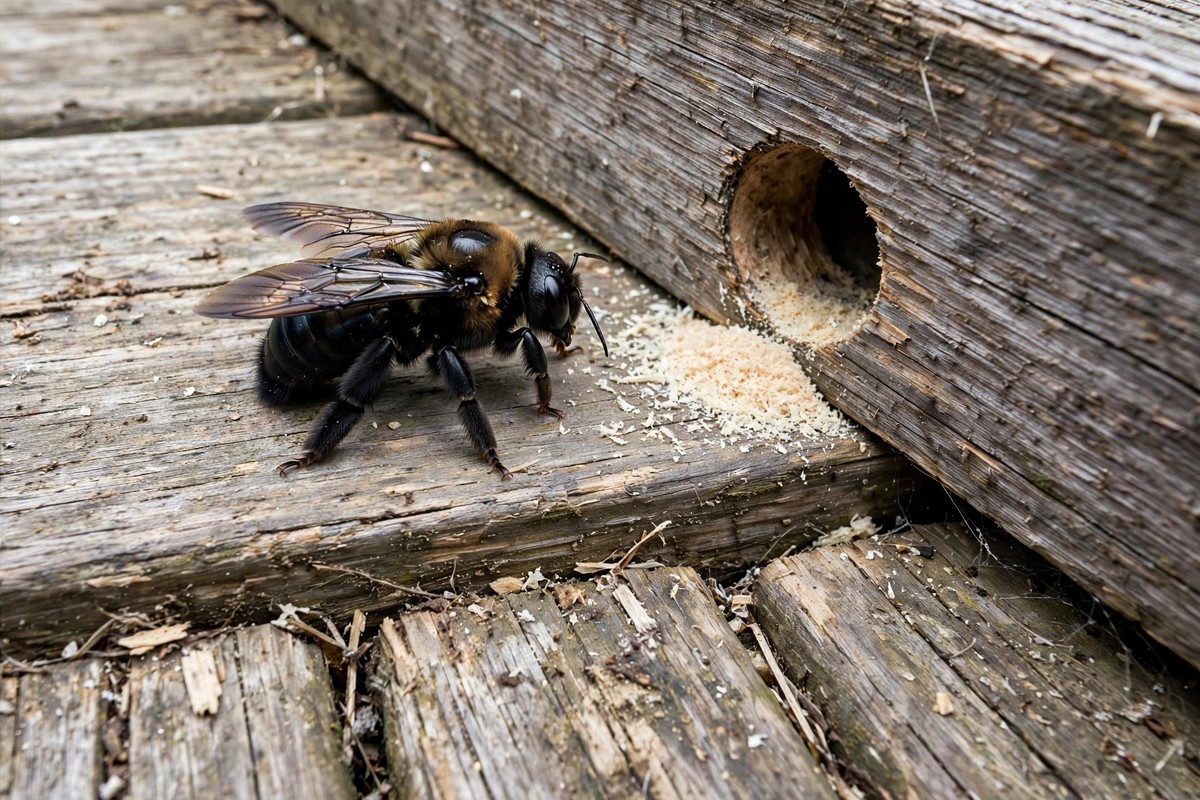
First: carpenter bee or bumble bee?
Most "bumble bees" North Jersey homeowners report in spring are actually carpenter bees. Bumble bees are fuzzy yellow-and-black all over; carpenter bees have a smooth, shiny black abdomen. Bumble bees visit flowers and move on — carpenter bees hover nose-to-nose with your railing for minutes. That hovering male can't sting; he's guarding the female drilling into your fascia.
The calling card is unmistakable: a perfectly round, pinky-finger-sized hole in unpainted wood with fine sawdust beneath. Decks, pergolas, fascia, railings, eaves, and cedar siding are all fair game — painted wood is far less attractive.
Spring is the danger season
Carpenter bees emerge in New Jersey in April and May. Females excavate new galleries — or re-open old ones — tunneling in, then turning to bore along the grain. A gallery can run six to twelve inches, with larvae developing inside through summer.
The real cost is compounding: galleries get reused and expanded year after year, and an entry hole from two years ago can be a foot of tunnel today. We've seen cedar decks across Wayne, Teaneck, and Paramus that look solid from above but are honeycombed underneath. Left alone, carpenter bees can do genuine structural damage.
Round Holes in Your Deck? Get a Free Inspection
We'll find every gallery, treat them properly, and tell you exactly what it'll take to fix it — same-day service across North Jersey.
(973) 653-8456Tap to call nowHow treatment actually works
Step 1 — Evening treatment of every gallery. In the evening, when bees are least active, we apply an insecticidal dust directly into each entry hole. The dust coats the female and larvae and gets carried deep into the tunnel — hardware-store wasp spray can't reach past the entrance.
Step 2 — Wait. Plugging an active gallery is the classic DIY mistake: the bee inside just chews a fresh exit hole. We wait until activity fully stops — usually late summer — before sealing anything.
Step 3 — Plug and seal. Once the season is over, every gallery gets plugged with wood filler or a dowel, sanded, and sealed — denying next spring's returning bees their favorite old entrances.
Step 4 — Make the wood unattractive. Painting or staining the wood — and keeping up with it — is the single best long-term deterrent.
What to do about the damage
A few holes in a railing just need plugging, sanding, and paint. If you can press a board and feel it give, or find multiple galleries along one board, replace that wood — and prime and paint replacements before installation, since bare new wood is a fresh invitation. In severe cases we bring in a carpenter after treatment.
The bottom line
Carpenter bees are one of our most predictable pests in Fair Lawn, Nutley, and the rest of North Jersey: they show up in spring, drill the same wood every year, and they're entirely stoppable. Treat in the evening, plug in the fall, paint the wood. Ignore them and they compound — a $300 treatment in May beats replacing deck boards in September.
Don't Let Them Honeycomb Your Deck
Free inspections, honest quotes, and treatment that actually reaches the galleries — across North Jersey.
(973) 653-8456Tap to call nowCarpenter Bee FAQs
How do I know if I have carpenter bees?
Look for perfectly round, dime-sized holes in unpainted wood — deck boards, fascia, railings, trim — with fine sawdust below, plus large bees hovering near the wood in spring. Carpenter bees have shiny black abdomens; fuzzy yellow-and-black ones are harmless bumble bees.
Do carpenter bees sting?
The males that hover and buzz around you cannot sting — they're all bluster. Females can sting but rarely do; they're too busy excavating galleries. They're not aggressive, but the wood damage they cause is very real.
Will carpenter bees come back to the same holes next year?
Yes. New generations reuse and expand old galleries year after year, so an untreated entry hole from a couple of seasons ago can be a foot of tunnel today. That's why galleries must be treated, then plugged after activity ends.
Can I just plug the holes myself?
Only after the bees are gone. Plug an active gallery and the bee inside will chew a fresh exit hole through your fascia. We treat the gallery first, confirm no activity, then plug and seal — usually in late summer or fall when the season is over.
How much does carpenter bee treatment cost in NJ?
A typical North Jersey carpenter bee treatment runs $200–$450 depending on gallery count and height — second-story fascia costs more to reach. Most jobs are one visit, and you always get the exact price first.