NJ Pest Guard Blog · Updated October 2026
Flea Treatment in NJ: How to Get Rid of Fleas in Your Home & Yard
Short answer: killing the fleas you see does almost nothing — about 95% of the population is eggs, larvae, and pupae hiding in carpet and the yard. Professional flea treatment targets every life stage, indoors and out, across 2 visits about 3 weeks apart.
Your pet is the flea express
Almost every flea infestation starts the same way: a dog or cat picks up a few adult fleas outside and carries them indoors. One female lays up to 50 eggs a day, and those eggs fall off wherever the animal rests — the dog bed, the couch, the bedroom carpet. That's why treating the pet alone never ends it: your vet treats the animal, we treat the environment, and both have to happen together.
The flea life cycle — why timing beats chemicals
Only one of the flea's four life stages is the adult you can see:
- Eggs — laid on the pet, fall off within hours; hatch in 2–14 days.
- Larvae — worm-like, hide deep in carpet fibers, under furniture, and in shaded yard soil for 5–20 days.
- Pupae — the armored stage. They shrug off insecticides and can stay dormant for weeks, waiting for vibration and warmth to trigger hatching.
- Adults — emerge, find a host, and start laying eggs within 48 hours.
The pupal stage defeats DIY and one-visit treatments: kill every adult today and a new wave hatches next week. That's why flea treatment is two visits — the second, 2–3 weeks later, catches what hatched in between.
Still Seeing Fleas After DIY? Get a Free Inspection
We'll find where the fleas breed and give you a firm quote before any work starts.
(973) 653-8456Tap to call nowWhy flea bombs and DIY sprays fail
The hardware-store flea bomb wastes money: foggers release insecticide into the air, but larvae live down in carpet fibers and under furniture, and pupae are bulletproof. The fog kills exposed adults and leaves a chemically coated house full of dormant pupae; your footsteps trigger them — the classic post-bombing "second wave."
Garden-center yard sprays miss the shaded spots where flea larvae develop.
The indoor + yard combo that actually ends it
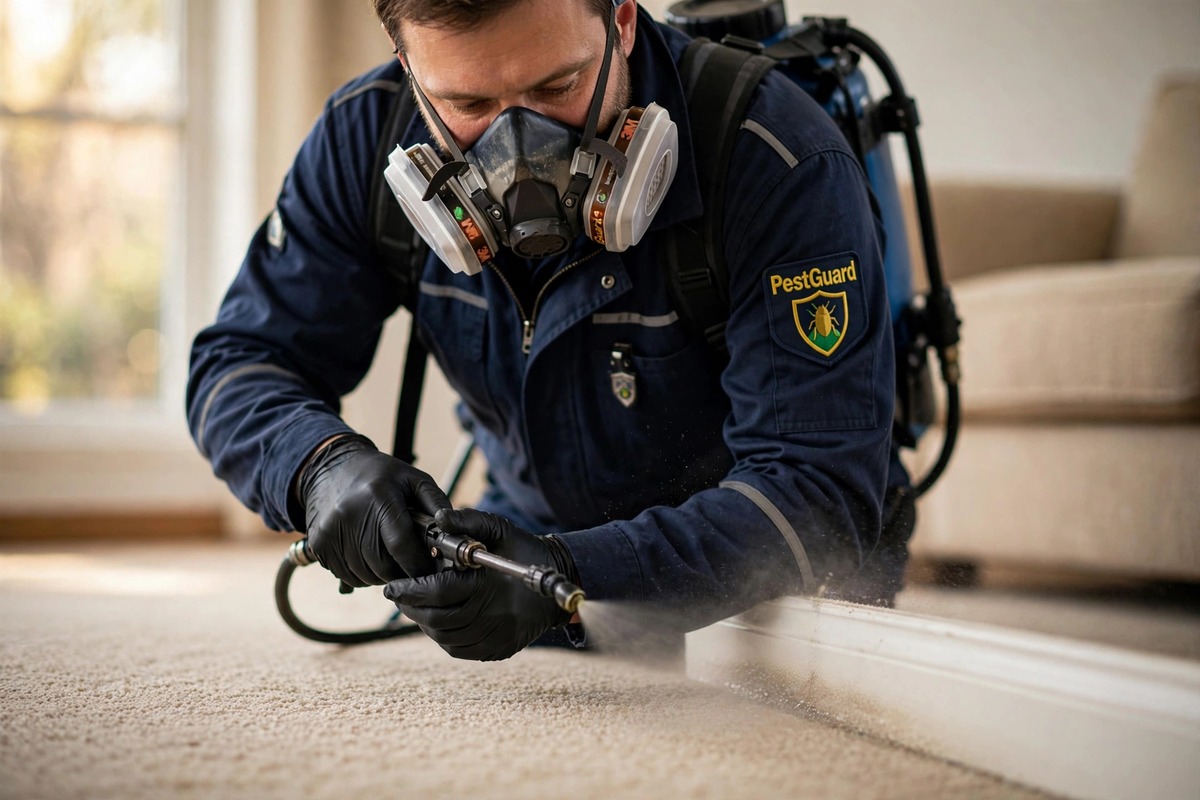
Indoors: we treat where fleas live, not where you see them — carpets, rugs, upholstery, pet resting areas, baseboard edges, under furniture — with an insect growth regulator (IGR) that stops larvae from becoming breeding adults. We vacuum-stimulate pupae before treatment so they hatch into it instead of weeks later. Your prep: vacuum thoroughly, wash pet bedding hot.
The yard: if your pet goes outside, the yard is a flea nursery — eggs and larvae develop in shaded soil under decks, along fence lines, and beneath shrubs. We treat those zones with the indoor visit so both populations collapse together.
The follow-up: 2–3 weeks later, we return, re-inspect, and retreat — catching what hatched after visit one. Most flea jobs resolve by week four. We treat fleas across Clifton, Hackensack, and Newark — pet households, rental units, and homes with no pets.
Protecting your pets safely during treatment
- Your vet treats the pet; we treat the property. Coordinate both — medication on the animal plus environmental treatment ends it.
- Keep pets off treated surfaces until dry — typically 2–4 hours.
- Wash pet bedding on hot and dry on the highest heat — the dryer kills every life stage.
The bottom line
Fleas are beatable, but only if you treat the whole life cycle — pet, home, and yard. Skip the foggers, get the pet on veterinary flea prevention, and treat the environment with a follow-up. Call early: a two-visit job in month one costs a fraction of a four-month infestation.
Fleas Won't Wait — Neither Should You
Free inspections, honest quotes, and the indoor-plus-yard treatment that ends flea infestations.
(973) 653-8456Tap to call nowFlea Treatment FAQs
How long does it take to get rid of fleas in a house?
Most flea jobs resolve in 3–4 weeks across two visits — the second visit catches the next hatch.
Do I need to treat my yard for fleas too?
If your pet spends time outside, usually yes. Eggs and larvae develop in shaded, moist yard spots — treating indoors while the yard reseeds the problem is why infestations keep coming back.
Are professional flea treatments safe for my dog and cat?
Yes, when used as directed. We use EPA-registered products and keep pets off treated surfaces until dry; your vet handles the on-pet medication.
Why do fleas keep coming back after I used a flea bomb?
Foggers only kill exposed adult fleas. Pupae are nearly indestructible and hatch days later — and foggers never reach under furniture or the yard where the real population lives.
Can fleas live on humans in NJ homes?
Fleas prefer pets and can't complete their life cycle on humans, but they will bite people — usually ankles and lower legs. No pets? The fleas likely came from a previous tenant's pet or wildlife like squirrels.