NJ Pest Guard Blog · Updated September 2026
How to Get Rid of Mice in Your NJ Home
Short answer: trap the ones inside, seal every entry point with rodent-proof materials, and remove what attracted them. Traps without sealing is a revolving door. Here's the complete playbook.
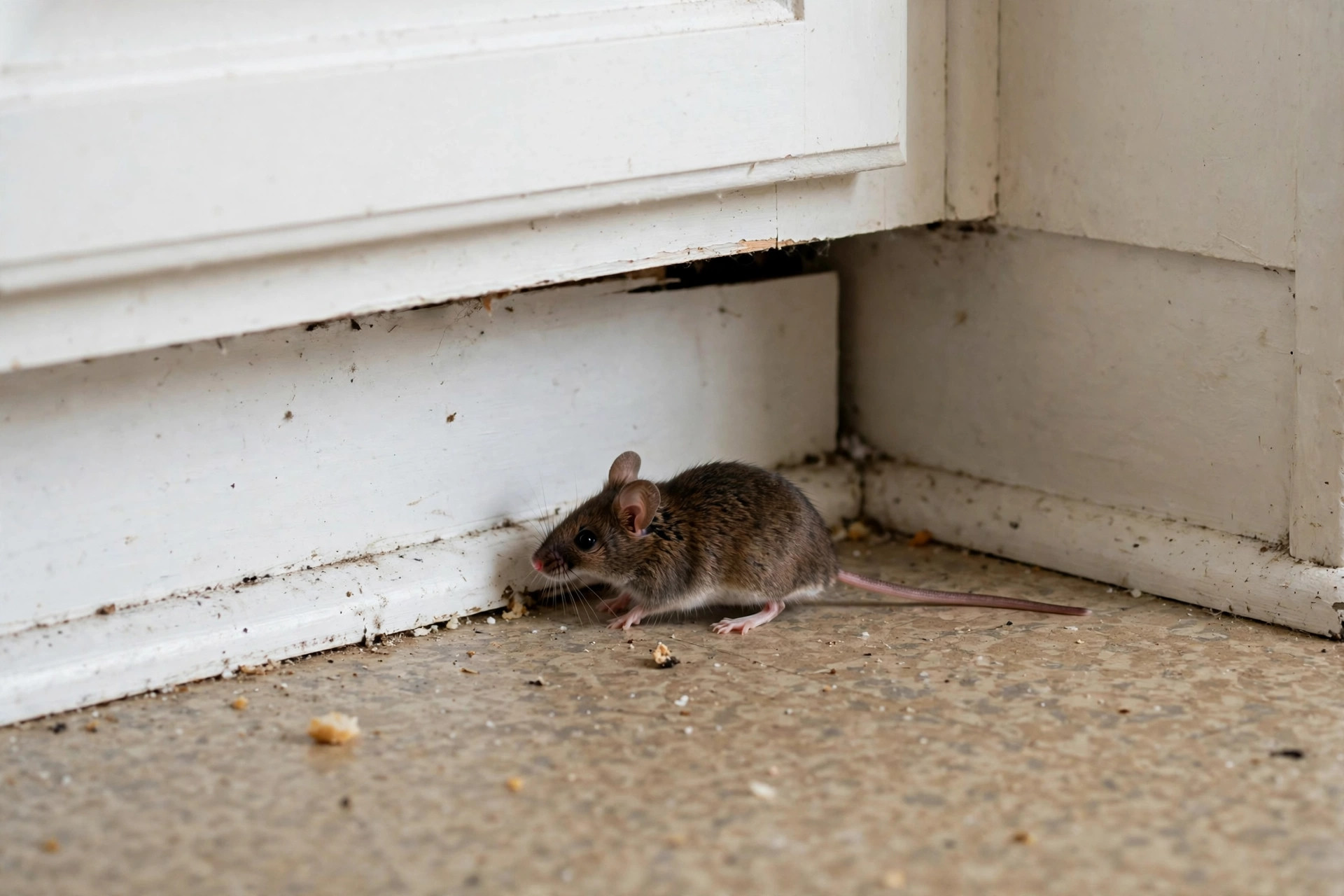
Why fall is mouse season in New Jersey
Every September and October, our phones light up across Clifton, Wayne, and Hackensack: scratching in the walls, droppings in the pantry. As nights cool, field mice move toward the warmth and food of your home.
A mouse fits through a hole the size of a dime — and your foundation, siding, utility lines, and garage door offer dozens of such gaps, especially in older North Jersey housing stock.
Confirm you have mice
- Droppings — small, dark, like grains of rice, along baseboards and inside cabinets.
- Noises at night — scratching or scurrying in walls and ceilings after the house goes quiet. Mice are nocturnal.
- Gnaw marks — on food packaging, baseboards, and wiring. Mice gnaw constantly, which is also how they start electrical fires.
- Nests — shredded paper or insulation tucked behind appliances or in storage boxes.
- A stale, musky odor in enclosed areas like pantries or under sinks.
Daytime attic scratching is more likely squirrels; heavy nighttime thumping could be rats. Treatment differs, so correct ID matters — it's the first thing we confirm on inspection.
Step 1: trap the ones inside
Snap traps are still the best DIY tool, and placement beats bait: set them perpendicular to walls with the trigger facing the wall, where you've seen droppings. Peanut butter, pea-sized. Set a dozen for a real infestation — not two — and keep trapping a full week after the last catch. One female produces 5–10 litters a year.
Skip ultrasonic repellers — mice habituate within days. And skip poison: poisoned mice die inside walls, and rodenticides endanger kids, pets, and the hawks and owls that control NJ's outdoor rodents.
Mice in the Walls? We'll Find How They're Getting In
Free inspections across North Jersey. We trap, remove, and seal entry points so they don't come back.
(973) 653-8456Tap to call nowStep 2: seal every entry point (the real fix)
Trapping without sealing is mopping with the tap running. Walk the exterior with a flashlight and check:
- Foundation gaps, especially where foundation meets siding and around basement windows.
- Utility penetrations — gaps around pipes, cables, and AC lines.
- Garage doors — worn weatherstripping is the number-one entry point we find.
- Vents and crawl space openings — unscreened or damaged covers.
- Exterior doors showing daylight underneath — they need new sweeps.
Seal with chew-proof materials: steel wool or copper mesh packed into gaps and caulked over, hardware cloth over vents, mortar for cracks. Never spray foam alone — mice chew straight through it.
Step 3: remove what invited them
- Food in sealed hard containers — mice chew through bags fast. Pet food and bird seed count.
- Clutter: cardboard boxes on basement and garage floors are mouse condos. Switch to sealed plastic bins.
- Exterior harborage: move firewood and brush away from the foundation; trim shrubs back from walls.
When to call a professional
DIY handles a mouse or two. Call a pro when you're catching mice for weeks, hear activity in unreachable walls, droppings return after sealing — or it's a multi-unit building. Paterson and Passaic landlords: rental rodent issues are generally your responsibility to fix.
A professional mouse job ($175–$350 for a typical North Jersey home) means trapping and removal, a full exterior inspection with rodent-proof sealing, and a follow-up to confirm it's over. The sealing is what you're paying for — skilled work most homeowners never fully complete alone.
The bottom line
Mice are a sealing problem disguised as a trapping problem. Trap what's inside, seal how they got in, remove what attracted them — do all three and it ends. If the scratching has gone on for weeks, a free inspection tells you where you stand in under an hour.
Hearing Scratching? Let's End It
Same-day mouse service across Paterson, Clifton, Passaic, Wayne, and Hackensack. Free inspections, upfront pricing.
(973) 653-8456Tap to call nowMouse Removal FAQs
Why do mice come inside NJ homes in the fall?
As temperatures drop in September and October, field mice move toward the warmth and shelter of homes. A mouse fits through a dime-sized hole, so the average North Jersey home offers dozens of entry points.
What are the signs of mice in the house?
Droppings the size of grains of rice along baseboards and in cabinets, scratching sounds in walls at night, gnaw marks on food packaging and wood, nests of shredded paper or insulation, and a stale musky odor in enclosed spaces.
Do ultrasonic pest repellers work for mice?
No — not reliably. Mice habituate to ultrasonic devices within days, and the sound doesn't penetrate the walls where mice travel. Snap traps, steel wool, and caulk work far better.
Should I use poison to get rid of mice?
We advise against it in most homes. Poisoned mice often die inside walls, and rodenticides endanger children, pets, and NJ wildlife like hawks and owls. Trapping plus exclusion is safer and more effective.
How do exterminators get rid of mice permanently?
Trapping and removing the current population, sealing every entry point with rodent-proof materials, and a follow-up to confirm it's over. Sealing is what makes it permanent.