NJ Pest Guard Blog · Updated September 2026
Pantry Moth & Stored-Product Pest Control in NJ
Short answer: pantry moths arrive on the groceries. Find the infested product, throw it out, vacuum every pantry crack, and store everything airtight. Three weeks of diligence ends it.
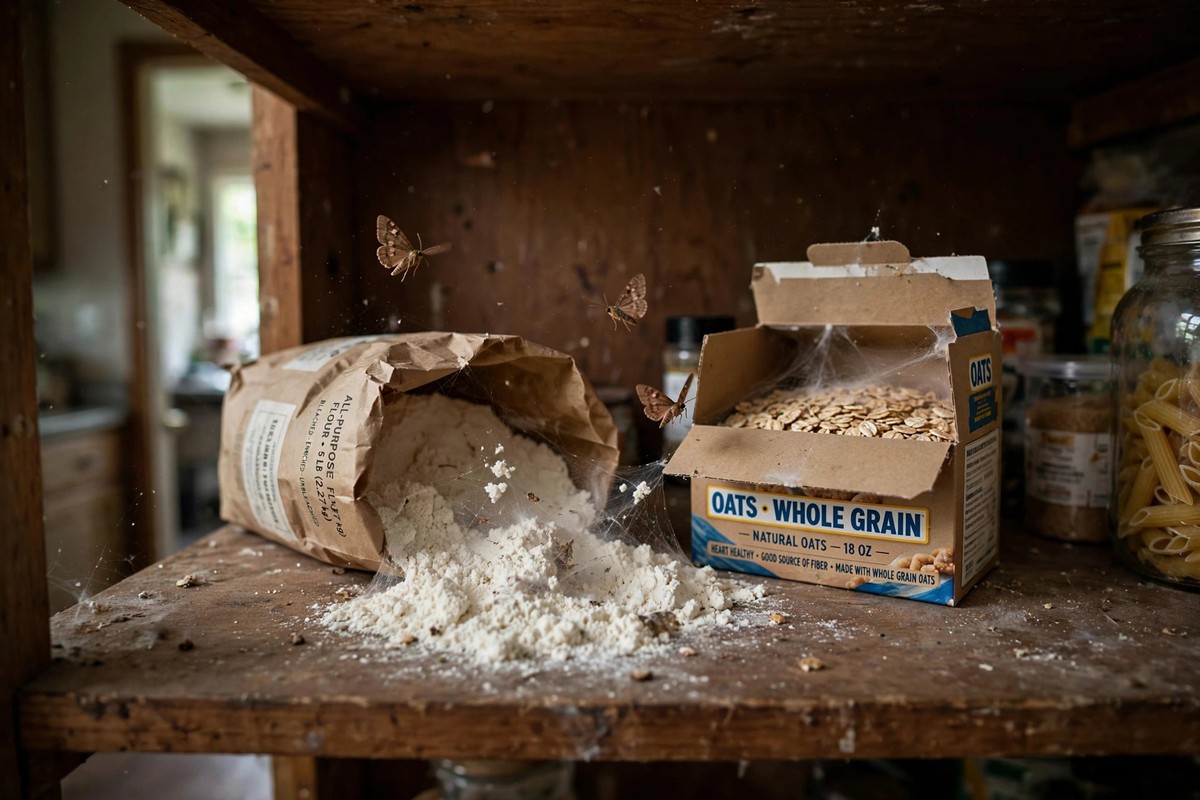
The culprits: what "pantry moths" actually are
Nine times out of ten, the moth in your kitchen is an Indian meal moth — small, bronze-and-gray. The moths are just the symptom: their larvae spin silk webbing through flour, cereal, rice, pasta, pet food, and birdseed. The webby clumps in the flour bag are the infestation; the moths on the ceiling are the adults it produced.
Other stored-product pests — cigarette beetles in tea and spices, sawtoothed grain beetles in box seams — get the same cleanup protocol.
The lifecycle: why they keep coming back
A female Indian meal moth lays up to 400 eggs directly in dry food. The eggs hatch in days, the larvae feed for two to six weeks, then crawl away — up walls, into cabinet corners, behind shelf brackets — to pupate. The whole loop takes four to eight weeks at kitchen temperatures. This is why killing the moths you see does almost nothing: every visible moth is a sign of larvae feeding somewhere you haven't looked. Toss the flour but miss the infested birdseed in the garage, and the cycle just keeps turning.
Moths Keep Coming Back? Get a Free Inspection
We'll find the source you're missing and end the cycle — same-day service across North Jersey.
(973) 653-8456Tap to call nowThe cleanup protocol
- Check everything dry. Every box, bag, and jar: flour, cereal, rice, pasta, oats, crackers, pet food, birdseed, spices, tea. The source is almost always the product you checked last — we find it in forgotten bulk bags and dog food in Clifton and Garfield more than anywhere else.
- Bag and remove infested products immediately. Seal in a bag and take it outside. Don't sift, don't salvage — larvae and webbing are through the whole product.
- Vacuum the pantry like you mean it. Empty the shelves and vacuum every crack, corner, shelf-pin hole, and bracket — pupae hide there. Empty the vacuum outside immediately.
- Wash shelves with hot soapy water to remove eggs and residue from the cracks. Let everything dry fully before restocking.
- Put pheromone traps up. They catch male moths, break the breeding cycle, and confirm when you're done. Keep them up a month after the last catch.
- Repeat the inspection in two weeks. Any surviving eggs will have hatched by then — one follow-through pass separates a solved problem from a recurring one.
No pesticides needed for a typical pantry moth job — it's a source-removal problem, not a spray problem. Store-bought sprays add chemicals to your shelves without reaching the larvae.
Prevention: keep them out for good
Airtight containers. Put everything dry into glass or hard plastic with sealing lids — cardboard boxes and folded bags are no barrier to a larva.
Freeze new grains. Freeze flour and rice for four days — this habit kills the eggs before they reach your pantry.
First in, first out. Date your bulk goods, use the oldest first, and don't stockpile six months of flour — old product is infested product waiting to happen.
Check pet food and birdseed. The dog food bag in the garage is the classic missed source — store it sealed and buy what you'll use within a month.
The bottom line
Pantry moths are beatable — homeowners in Paramus, Wayne, and Teaneck who follow this protocol are done in a month; skippers call us back in two. Find the source, clean the cracks, trap for a month, store airtight. Moths after four weeks mean a second source — call us.
Done Throwing Out Groceries?
Free inspections, no-spray-needed honesty, and a protocol that actually ends the cycle — across North Jersey.
(973) 653-8456Tap to call nowPantry Moth FAQs
What are pantry moths?
Most "pantry moths" in NJ are Indian meal moths — small, bronze-and-gray moths whose larvae infest flour, cereal, rice, pasta, pet food, and birdseed. You may never see the moths themselves; the giveaway is webby clumps in dry goods and larvae in the pantry.
Where do pantry moths come from?
They arrive in the groceries — eggs hitchhike in flour, cereal, rice, or pet food from the store, and one infested bag seeds the pantry. Not a sign of a dirty kitchen.
Do I have to throw away all my food?
Just the infested products and anything opened near them — sealed packages can stay. If you see webbing, larvae, or clumping, bag it and take it outside. Don't salvage by sifting.
How long until pantry moths are gone?
With a full cleanup you should see the last moths within 3 to 4 weeks. The life cycle runs 4 to 8 weeks, so moths after a month mean a second source you haven't found.
Are pantry moths dangerous?
No — they don't bite, sting, or carry diseases. They're a contamination and nuisance problem: the larvae web through and foul the food they infest. The real damage is to your grocery bill and your appetite.