NJ Pest Guard Blog · Updated October 2026
Silverfish & Centipede Control in NJ: Tackling Damp-Basement Pests
Short answer: silverfish and house centipedes are symptoms of basement moisture. Dry the basement below 50% humidity, seal the gaps, treat the harborages — and both pests leave. Here's the full playbook.
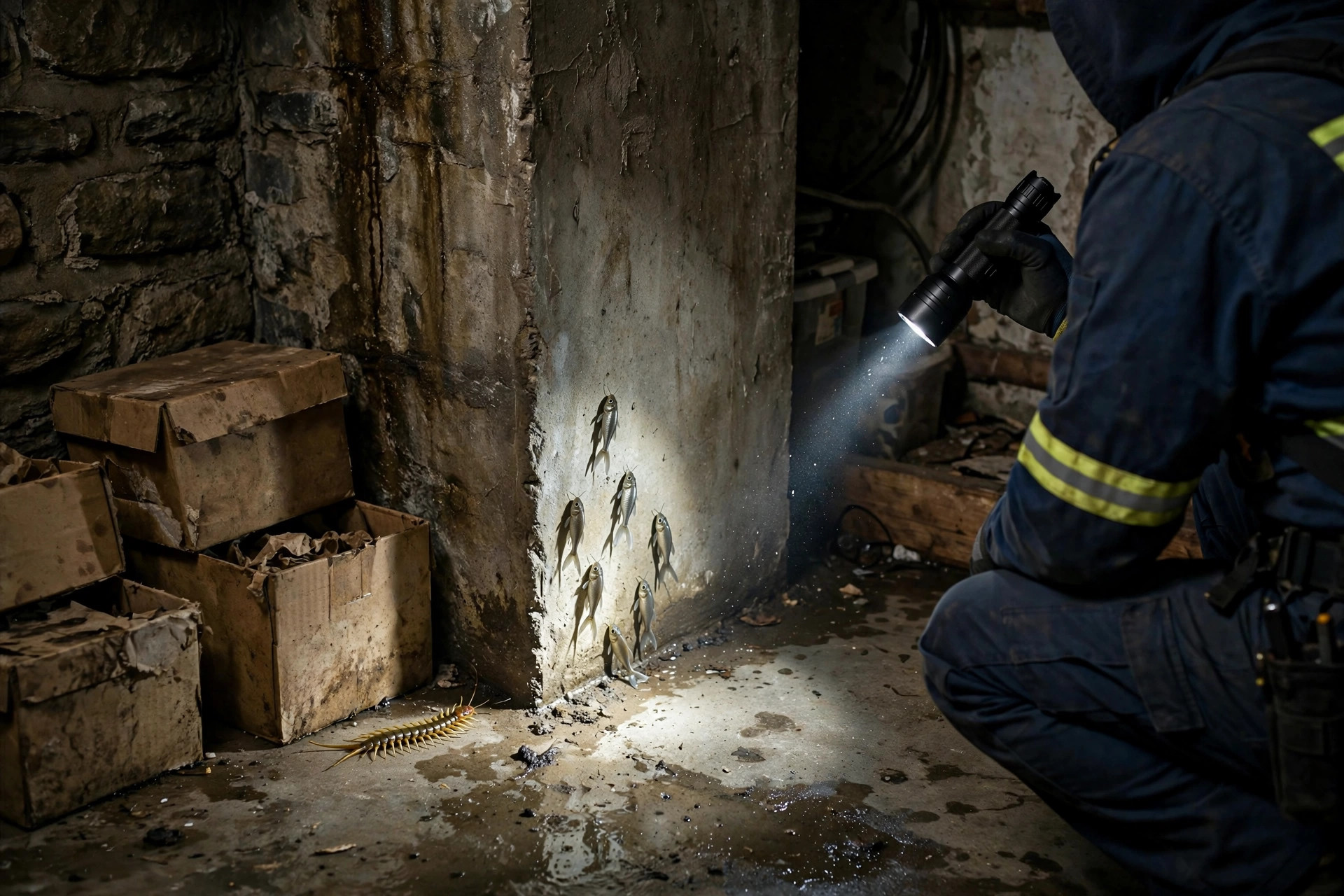
What you're actually looking at
Silverfish are the teardrop-shaped, silver-gray insects you find in boxes, books, and basement corners. They don't bite or spread disease — but they eat paper, books, wallpaper paste, photos, dry foods, and fabrics. House centipedes are the leggy, fast-moving ones with long banded legs. They don't bite people either — they're predators that eat the silverfish, spiders, and other insects in your basement.
Centipedes are a sign: a basement full of centipedes is full of prey, and a basement full of prey has a moisture problem.
Step 1 — Find the moisture
Silverfish need humidity above 75% to thrive, and centipedes need the damp harborage and prey that moisture attracts. So before any treatment, we diagnose the water: grade sloping toward the foundation? Gutters dumping at the base of the house? Wicking through stone or block walls, common in older NJ homes? A sump pump that hasn't run right in years?
A $30 hygrometer tells you more than any spray. If your basement reads above 50–55% humidity in summer, you have the conditions these pests need. Below 50%, silverfish populations collapse on their own — that's the target.
Step 2 — Cut off the harborage
- Replace cardboard with plastic. Cardboard is silverfish food, shelter, and a moisture sponge — move stored items into sealed bins.
- Declutter the perimeter. Boxes against foundation walls block airflow and hide moisture. Pull storage 6 inches off the wall.
- Seal the gaps. Caulk around utility penetrations, seal foundation cracks, and weatherstrip bulkhead doors. Every gap is a highway for centipedes.
- Fix the exterior water. Extend downspouts 6+ feet from the foundation and regrade soil to slope away. This single fix ends more basement bug problems than any product.
- Run a dehumidifier. Drain it to a sump or sink so you never empty it, and keep humidity at 45–50%.
Damp Basement, Bug Problem?
We diagnose the moisture and treat the pests — and tell you exactly what fixes the cause, not just the symptom. Free inspections.
(973) 653-8456Tap to call nowStep 3 — Treat what remains
Once the moisture is under control, targeted treatment finishes the job: residuals in wall voids and along baseboards, dusts in undisturbed voids, and bait where appropriate. We don't fog basements — fogging scatters pests deeper and ignores the humidity.
Why DIY usually fails here
Store-bought sprays kill the insects you can see — not the ones hiding in wall voids, behind baseboards, and inside stored paper. Contact sprays never reach them, and the moisture that brought them stays. The population rebuilds within weeks. Moisture control plus professional treatment breaks the cycle.
The bottom line
Silverfish and house centipedes are your basement's way of telling you it's too wet. Dry it out, seal it up, treat the harborages — and the problem ends instead of restarting every season. We handle damp-basement pest work across Saddle Brook, Garfield, Elmwood Park, Fair Lawn, and the rest of North Jersey. Call for a free inspection.
Stop Treating the Symptom
Free inspections, honest moisture diagnosis, and treatment that finishes the job across North Jersey.
(973) 653-8456Silverfish & Centipede FAQs
Are silverfish harmful in my NJ home?
They don't bite or spread disease, but they're destructive: silverfish eat paper, books, wallpaper paste, photos, and dry goods, and they ruin stored items over time. Their presence also signals excess moisture, which invites worse problems.
Are house centipedes dangerous?
No — house centipedes don't bite people, and they're actually predators that eat silverfish, spiders, and other basement insects. But a lot of centipedes means a lot of prey, which means a moisture problem worth fixing.
How do I get rid of silverfish in my basement?
Start with moisture control: a dehumidifier keeping humidity below 50%, sealing foundation gaps, and fixing grading so water runs away from the house. Then declutter cardboard and paper storage, and have a pro treat harborages. Silverfish die off when the basement dries out.
Do store-bought silverfish sprays work?
Rarely for long. Contact sprays kill the bugs you hit, but silverfish hide in wall voids, under appliances, and in stored paper where sprays never reach — and the moisture that brought them stays. Without moisture control, the population rebuilds in weeks.
Why does my finished basement still get these bugs?
Finishing doesn't fix moisture — it often hides it. Water still wicks through foundation walls and floors, and the drywall and carpet give silverfish food and harborage they didn't have before. A finished basement with recurring bugs almost always has a hidden moisture problem.