NJ Pest Guard Blog · Updated September 2026
Spider Control in NJ: From House Spiders to Black Widows
Short answer: most NJ spiders are harmless house spiders, cellar spiders, and sac spiders. Real spider control isn't spraying — it's removing webs and egg sacs, sealing entry points, and cutting off their insect food supply. Black widows exist in NJ but are rare and almost never found indoors.
The spiders you're actually seeing in NJ
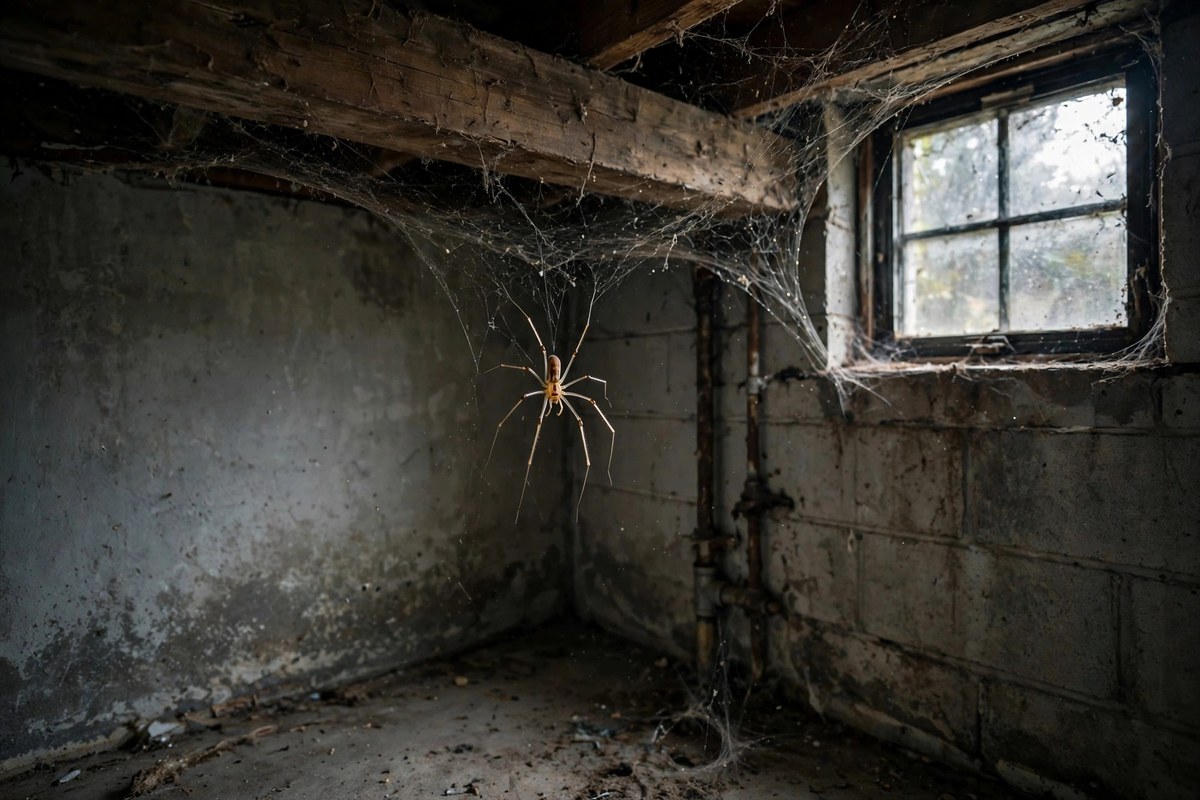
Common house spiders build messy cobwebs in corners, under furniture, and along ceiling lines — they're harmless. Cellar spiders — the long-legged, delicate ones — hang in damp basements, crawl spaces, and boiler rooms, where they actually eat other spiders. Sac spiders are the pale ones that show up along baseboards and get blamed for mystery bites, but confirmed bites are rare and minor.
Wolf spiders are the ground hunters: big, fast, and hairy, they don't build webs — they chase prey on foot. They wander in through garage doors and basement gaps in late summer, looking alarming but harmless. People call us about wolf spiders in Wayne and Paramus every September.
Black widows do exist in New Jersey — but they are rare, and they are outdoor spiders. You find them in quiet, undisturbed spots: woodpiles, sheds, stone walls, meter boxes. They are almost never the spider in your living room or basement. If you find a shiny black spider with a red hourglass marking in an outdoor hiding spot, don't handle it — call us for a professional ID and safe removal.
Web-builders vs. ground hunters: why it changes the treatment
Web-building spiders (house spiders, cellar spiders) sit in one place, so control is mostly mechanical: remove the webs, remove the egg sacs, and the population drops. Ground-hunting spiders (wolf spiders, sac spiders) roam, so control is about entry points and habitat: seal the gaps they're walking through and clear the clutter and leaf litter they're hunting in. Either way, one fact most companies won't mention: spiders don't groom themselves like insects do, so residual sprays kill them mainly through direct contact — spraying baseboards for spiders is mostly theater.
Spiders Taking Over? Get a Free Inspection
We'll identify what you're dealing with and lay out a plan that actually works — across North Jersey.
(973) 653-8456Tap to call nowWhat a pro actually does about spiders
- Web and egg-sac removal — physically clearing webs and sacs from eaves, corners, basements, and crawl spaces. One egg sac holds dozens of spiderlings, so this step matters most.
- Exclusion — sealing cracks around foundations, utility lines, door sweeps, and garage gaps where spiders (and their prey) enter.
- Prey reduction — an exterior perimeter treatment that knocks down flies, ants, and other insects. Fewer bugs, fewer spiders. This is the step that keeps them from coming back.
- Habitat cleanup — clearing leaf litter, firewood stacked against the house, and overgrown foundation plantings that harbor hunting spiders.
- Targeted contact treatment where needed — applied directly to harborages, not broadcast across your baseboards.
This approach works whether you're in a Teaneck colonial with a damp basement full of cellar spiders or a Garfield ranch where wolf spiders wander in every fall.
Prevention: keeping spiders out for good
Cut the insect population around your home's exterior and you cut the spider population with it. Keep foundation plantings trimmed back, swap white exterior bulbs (which attract night-flying insects) for yellow ones, and fix basement moisture — dampness draws the insects that draw the spiders. Inside, regular dusting of corners removes webs before egg sacs appear.
The bottom line
NJ spiders are overwhelmingly harmless, but heavy webbing, recurring egg sacs, and spiders that keep appearing despite cleanup are worth a professional look — and any suspected black widow deserves a pro ID, not a DIY encounter. Start at our North Jersey pest control homepage or call for a free inspection.
Free Inspection — Honest Answers About Spiders
Same-day service, firm pricing, and follow-ups that finish the job.
(973) 653-8456Tap to call nowSpider Control FAQs
Are there black widow spiders in New Jersey?
Yes, but they're rare. Black widows exist in NJ, typically in quiet outdoor spots like woodpiles, sheds, and stone walls — not inside homes. The vast majority of spiders you see indoors in NJ are harmless house spiders, cellar spiders, or sac spiders.
Are any NJ house spiders dangerous?
No. Common NJ indoor spiders — house spiders, cellar spiders, and sac spiders — are not medically dangerous. Their bites are rare and typically cause nothing more than minor, short-lived irritation.
Do spider sprays work?
Not well on their own. Spiders don't groom like insects, so residual sprays kill them mostly through direct contact. Real spider control means removing webs and egg sacs, sealing entry points, and reducing the insect prey they feed on.
How do I keep spiders out of my basement?
Declutter, seal cracks around the foundation and utility lines, fix moisture problems (cellar spiders love damp basements), and remove webs and egg sacs regularly. An exterior perimeter treatment that reduces other insects cuts off the spiders' food supply.
When should I call a pro for spiders in NJ?
Call when webs and spiders keep returning despite cleanup, when you find egg sacs repeatedly, when outdoor populations are heavy (dozens of webs on siding or fences), or any time you suspect a black widow and want a professional ID.