NJ Pest Guard Blog · Updated September 2026
7 Signs of Termites in Your New Jersey Home
Short answer: mud tubes on the foundation, spring swarmers, discarded wings on windowsills, and wood that sounds hollow are the classic warnings. Insurance won't cover termite damage — so catching them early is everything.
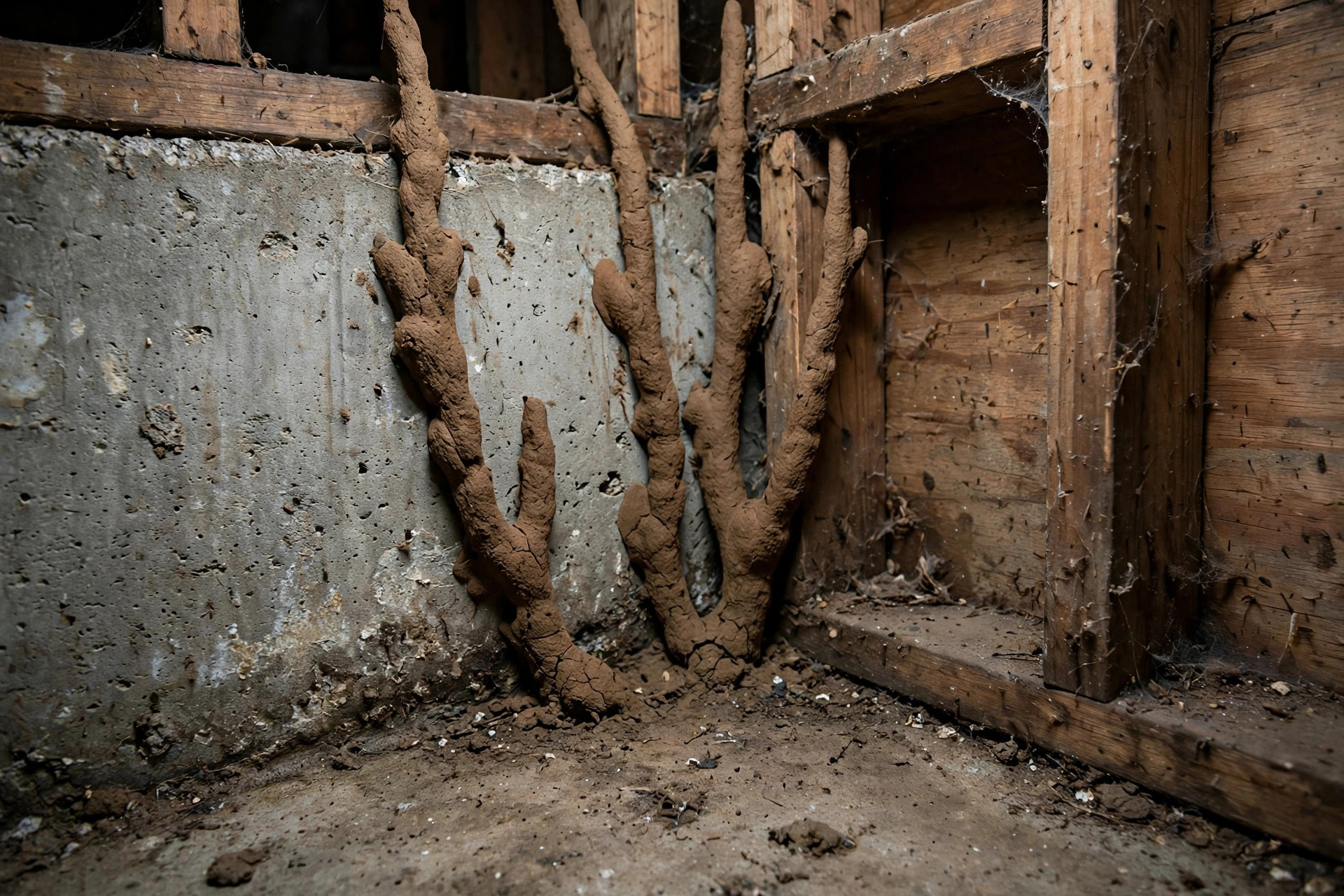
Eastern subterranean termites are NJ's most destructive home pest — from Wayne colonials to Hackensack capes with damp crawl spaces. By the time most homeowners notice, the colony has fed for years. These seven signs catch them early, when treatment costs hundreds instead of thousands.
1. Mud tubes on foundations and basement walls
The number-one sign. Subterranean termites build pencil-width soil tunnels as protected highways from the colony to your house. Check foundation walls, crawl space piers, and basement walls — break a small section open and live workers streaming through means an active infestation.
2. Swarmers in spring (April–June)
Each spring, mature colonies send out winged reproductives — usually on warm, humid days after rain. A swarm looks like flying insects pouring from a foundation crack or mulch bed. It proves a mature colony is close by: get inspected.
3. Discarded wings on windowsills and floors
After swarming, termites twist off their wings and crawl away. Piles of small, translucent, equal-sized wings on windowsills are a classic sign — and wings found inside mean swarmers emerged from within. Call the same day.
Spotted Any of These Signs?
Every month costs you wood. Free termite inspections across North Jersey.
(973) 653-8456Tap to call now4. Wood that sounds hollow or feels papery
Termites eat from the inside out, leaving the surface intact. Tap suspect baseboards and sills with a screwdriver handle: solid wood thuds, damaged wood sounds hollow. Probe gently — if an awl sinks in with no resistance, something's been eating in there.
5. Bubbling paint and sticking doors or windows
Termite activity brings moisture into wood, making paint bubble or peel like water damage with no leak. Doors and windows that suddenly stick can signal warped frames. In NJ's humid summers, homeowners blame the weather — sometimes it's termites instead.
6. Frass and mud-packed galleries
Layered, hollowed-out channels packed with dried mud inside a board is termite signature damage — no other common NJ pest lines its galleries with soil.
7. Swarmers emerging indoors
Winged termites inside your home — from a baseboard gap or wall crack — means the colony is in the structure itself. The most urgent sign on this list: call the same day.
Termite damage vs. carpenter ant damage
North Jersey has both:
- Termites eat along the grain, pack galleries with mud, and build mud tubes. Workers are pale with straight antennae and no pinched waist.
- Carpenter ants excavate clean galleries across the grain and push out sawdust-like frass. No mud tubes, ever.
Both damage homes and both need a pro, but the treatments differ completely — which is why correct identification at inspection matters.
When to call — and what happens next
Call at the first confirmed sign: mud tubes, indoor wings, or damaged wood. Skip DIY termite sprays — they kill visible workers while the colony keeps feeding underground, and repellents can make a colony split and spread.
A professional job starts with a full inspection: foundation, crawl space, basement, sill plates, plus mulch beds and woodpiles outside. Treatment is typically a liquid barrier, a bait system, or both ($800–$2,500+), followed by annual inspections — termite pressure in New Jersey never really goes away.
Buying a home? A wood-destroying insect inspection is standard in NJ contracts and required for VA/FHA loans. Not buying? Any older home with a basement or crawl space deserves an inspection every year or two — free, under an hour, and the cheapest protection against a five-figure repair your policy won't cover.
The bottom line
Walk your foundation every spring and learn these seven signs — termites punish inattention expensively. If anything here looks familiar at your Paterson, Clifton, or Passaic home, the inspection is free.
Get a Free Termite Inspection
If termites are there, we'll find them — and quote on the spot. Serving all of North Jersey.
(973) 653-8456Tap to call nowTermite FAQs
What do termite mud tubes look like?
Pencil-width tunnels of packed soil on foundation walls or crawl space piers — protected highways between the colony and your house. Intact tubes with live workers inside mean an active infestation.
When do termites swarm in New Jersey?
Eastern subterranean termites swarm April through June, usually on warm, humid days after rain. A swarm — or piles of discarded wings on windowsills — signals a mature colony nearby.
How can I tell termite damage from carpenter ant damage?
Termites eat along the grain, pack galleries with mud, and build mud tubes. Carpenter ants excavate clean galleries across the grain and push out sawdust-like frass. Ants never build mud tubes.
How much damage can termites do to a NJ home?
A mature colony eats roughly a pound of wood per day, and infestations typically go undetected for years. Repairs commonly run $3,000–$10,000+, and homeowners insurance almost never covers termite damage.
Should I get a termite inspection when buying a home in NJ?
Yes — it's standard in NJ purchase contracts and required for VA/FHA loans. Even if you're not buying, any home more than a few years old with a basement or crawl space should be inspected every 1–2 years.
Wondering what treatment runs? See how much termite treatment costs in New Jersey.