NJ Pest Guard Blog · Updated October 2026
Bed Bug Heat Treatment vs. Chemical: Which Is Better in NJ?
Short answer: heat kills every life stage including eggs in one day but costs more with no residual protection. Chemical is cheaper with lasting residual but needs 2–3 visits. Severe or multi-unit cases usually need both.
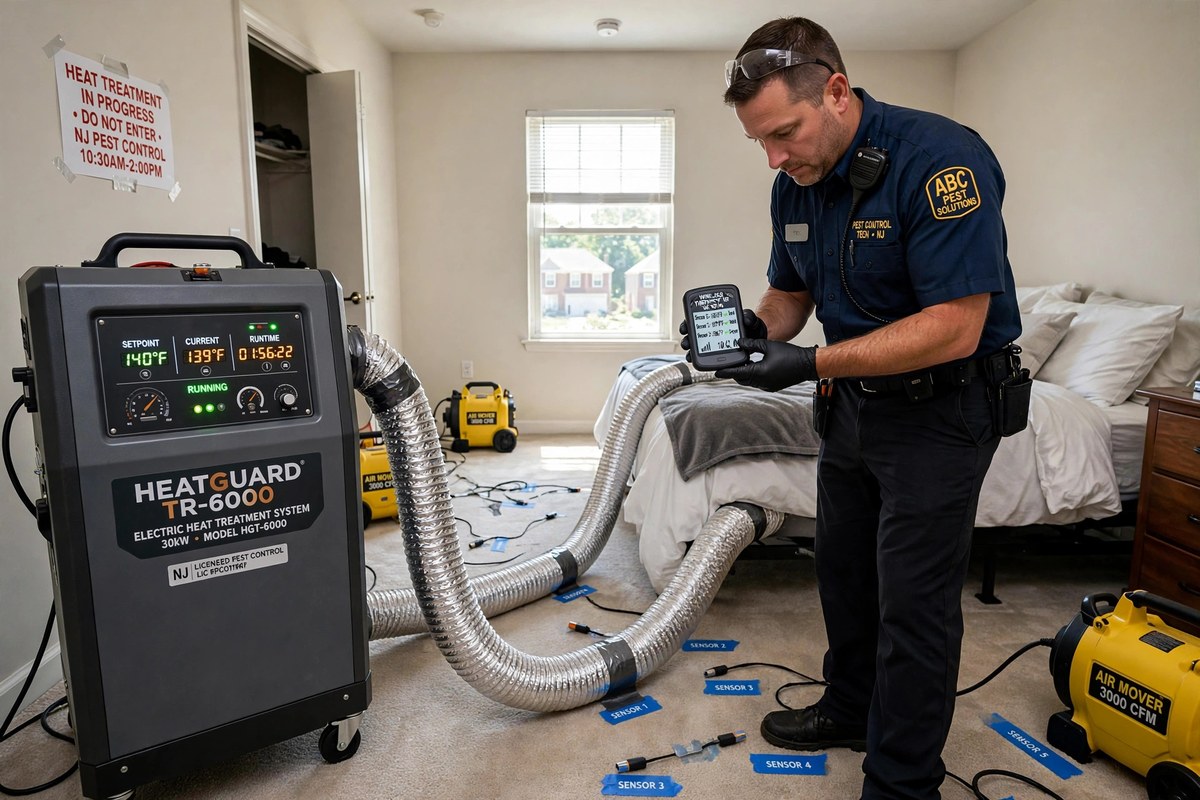
How heat treatment works
Professional heat treatment raises rooms to 120–140°F and holds them there for hours. Industrial heaters and high-velocity fans push hot air into every corner — under beds, behind baseboards, into wall voids and furniture joints sprays can't reach — while wireless sensors confirm every zone hits lethal temperature.
Bed bugs and their eggs die above about 113°F, so heat is the only method that reliably ends an infestation, eggs included, in a single day — and it's chemical-free, which matters for households with chemical sensitivities or newborns. The tradeoffs: higher cost, a full day out of the house, and zero residual protection once the room cools.
How chemical treatment works
Chemical treatment is a sequence, not one spray. An inspection maps every harborage — mattress seams, box springs, bed frames, nightstands, baseboards, outlets, wall voids — then targeted, EPA-registered products go exactly there: residuals on cracks and crevices, dust in wall voids, sometimes steam on seams.
The catch: eggs shrug off nearly every chemical. They hatch in 6–10 days, so follow-ups at two-week intervals catch new nymphs before they breed. Two to three visits is standard, and the residual keeps killing between visits. Chemical is also far easier on prep: no full-day vacancy, nothing removed for heat sensitivity.
Not Sure Which Treatment You Need? Get a Free Inspection
We'll assess your infestation and recommend the right method — with a firm quote.
(973) 653-8456Tap to call nowCost and timeline, side by side
- Heat: $1,000–$1,500+ for a typical NJ home, one treatment day, everyone out. One and done — but no residual.
- Chemical: $500–$900 typical, 2–3 visits over 4–6 weeks, minimal disruption, lasting residual protection.
- Combined: the premium option for severe infestations — heat for knockdown, residuals for ongoing protection. Costs more, lowest failure rate we see.
Price isn't the only math. A $700 chemical job needing a third visit is still cheaper than heat — but a severe infestation in a Paterson or Passaic walk-up with bugs pouring in from next door may burn through chemical visits. We quote the right method for the situation.
Prep: what each method asks of you
Heat prep is the heavier lift: candles, aerosols, wine, plants, oil paintings, and certain electronics come out; furniture gets pulled from walls; laundry still gets the hot-wash/high-heat-dry treatment; everyone — people and pets — is out for the full day.
Chemical prep is the standard checklist: strip and hot-wash bedding, bag clothing, declutter floors and under beds, vacuum mattress seams and carpet edges. No full-day vacancy, and the mattress doesn't go to the curb. Our full bed bug treatment guide has the complete checklist.
The apartment factor: when the answer changes
In North Jersey's dense apartment and two-family stock — Newark, Clifton, Jersey City — bed bugs travel through wall voids, along plumbing and electrical lines, and under doors. Heat kills everything in your unit today, but a neighboring infestation means re-entry is only a matter of time — with no residual down, nothing is waiting for the newcomers.
That's why, for multi-unit buildings, we usually recommend chemical with residual — or the combined approach — plus coordinating with the landlord to inspect adjacent units. NJ landlords are generally responsible for building-wide problems — here's the breakdown.
The bottom line
Heat is the fastest single-day kill — and the most expensive, with no lasting protection. Chemical is the affordable workhorse that needs patience and follow-ups.
Bed Bugs Don't Wait — Neither Should You
Free inspections, honest quotes, and the right method for your situation.
(973) 653-8456Tap to call nowHeat vs. Chemical FAQs
How much does bed bug heat treatment cost in NJ?
Whole-home heat treatment in NJ runs $1,000–$1,500+ depending on home size. Chemical treatment runs $500–$900 for a standard job with follow-ups.
Does heat treatment kill bed bug eggs?
Yes — that's heat's biggest advantage. Sustained 120–140°F kills every life stage including eggs in one day. Chemical can't reliably kill eggs, which is why it needs follow-up visits 2–4 weeks later.
Can I stay home during bed bug heat treatment?
No. Rooms hold 120–140°F for hours — unsafe for people, pets, and plants. Everyone leaves for the day, and heat-sensitive items like candles, aerosols, and certain electronics are removed.
Is chemical bed bug treatment safe for kids and pets?
Yes, when used as directed. Professionals apply targeted, EPA-registered products to cracks, crevices, and harborages — not broadcast across the room. You get clear re-entry instructions, usually a few hours.
Which works better for apartments: heat or chemical?
In multi-unit buildings, chemical with residual protection often wins. Heat kills everything in your unit today, but bugs can re-enter from next door with no residual to stop them. The combined approach is usually strongest.