NJ Pest Guard Blog · Updated October 2026
Fall Pest-Proofing Checklist for NJ Homes
Short answer: fall is when pests move in — mice through dime-sized gaps, stink bugs into wall voids. Seal the shell, clean the yard, and check the garage now to skip the winter infestation.
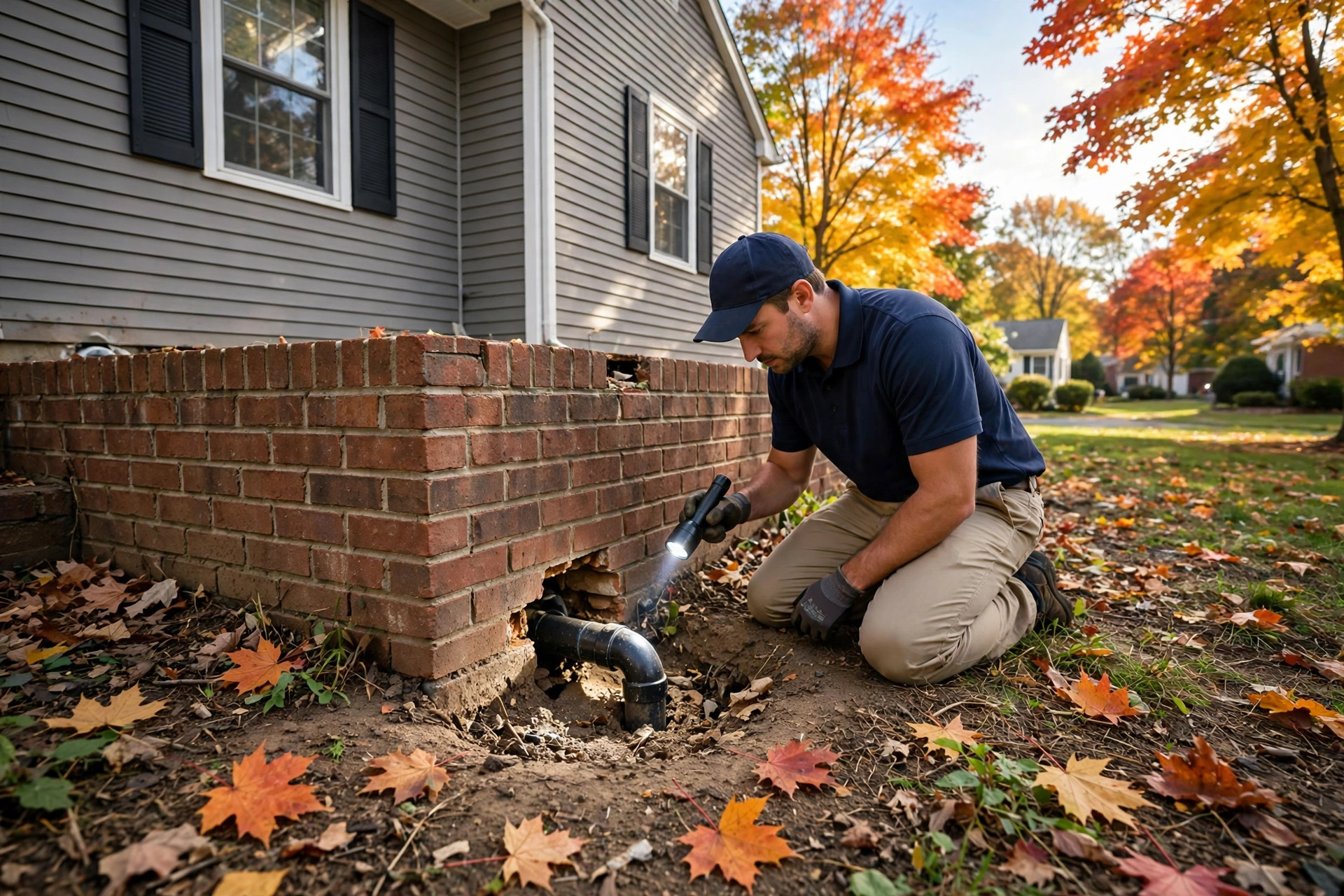
Why fall is invasion season in NJ
When nighttime temperatures drop into the 50s, every mouse near your house starts looking for a warm winter address. Mice squeeze through dime-sized openings, and a typical NJ home has dozens: around gas lines, under garage doors, and through basement windows.
It's not just mice — stink bugs and boxelder bugs slip into wall voids through the same gaps every October, while ants make their last big foraging push before winter. Every one of these invasions starts at an entry point you can seal — if you get to it before November.
Exterior: seal the shell
Walk your home's perimeter, checking the foundation, siding, and every entry point — the highest-value hour of pest-proofing you'll do all year.
- Seal gaps around pipes, wires, and vents with copper mesh plus caulk or foam — mesh stops mice from chewing back through.
- Install door sweeps on every exterior door, including the garage-to-house door — if you can see daylight under a door, a mouse can get through.
- Fix basement windows that no longer latch and add tight-fitting screens.
- Caulk gaps where siding meets the foundation — a highway for mice and overwintering insects.
- Screen vents and cap the chimney. Attic and crawl-space vents need intact mesh, and raccoons scout for open chimneys in fall.
- Seal gaps around the garage door — the number-one mouse entry point in most homes, since the big door seal wears out fast.
Yard and garage: remove the welcome mat
Pests start in the yard — fall is the time to make your property inhospitable.
- Move firewood 20 feet from the house and off the ground — woodpiles are mouse and carpenter-ant condominiums.
- Trim branches touching the house — they're a bridge for mice and carpenter ants.
- Pull mulch and leaf litter back from the foundation — thick mulch against siding holds moisture that attracts ants and shelters mice.
- Secure trash with tight lids and pick up fallen fruit — it feeds mice, yellowjackets, and raccoons.
- Declutter the garage: mice nest in cardboard boxes. Switch to sealed plastic bins and store pet food airtight — open bags of bird seed are a dinner bell.
Get a Free Fall Inspection
We'll find entry points and early signs before they become a winter infestation.
(973) 653-8456Tap to call nowInside: habits that keep them out
Even a well-sealed house gets pressure — these habits make your home a bad target.
- Store pantry goods in sealed containers — pantry pests start in open bags and boxes.
- Don't leave pet food out overnight — the most common indoor attractant for mice.
- Fix leaks under sinks and in basements. Moisture draws roaches, drain flies, and silverfish year-round.
- Vacuum along baseboards and behind appliances — you're removing the crumbs and pheromone trails that guide ants and roaches.
When to call an exterminator
Do this checklist in September or October and you'll prevent most fall invasions. But call us if you hear scratching in walls at night, find droppings in the garage, or spot indoor ant trails — we handle fall invasions weekly in Clifton and Teaneck.
A professional exclusion job — trapping what's inside plus sealing how they got in — ends a mouse problem instead of pausing it.
The bottom line
Fall pest-proofing is a weekend of work that buys a pest-free winter. Seal the shell, clean the yard, change a few indoor habits — and handle anything already inside while the problem is small. The homes we pest-proof in October — from Wallington to Garfield to Lodi — are the ones that never generate January emergency calls.
Winter-Proof Your Home This Fall
Free inspections and exclusion work that keeps mice and bugs out all winter.
(973) 653-8456Tap to call nowFall Pest-Proofing FAQs
When should I pest-proof my home in NJ?
September and October, before the first sustained cold snap. Mice start moving indoors when nighttime temperatures drop into the 50s.
How do mice get into NJ homes in fall?
Through dime-sized gaps: around utility lines, under doors with worn sweeps, and through unlatched basement windows.
Does pest-proofing really keep bugs out?
Yes. Sealing entry points stops mice and overwintering insects — no chemical replaces a sealed house.
What should I seal around my foundation?
Pack copper mesh into gaps around pipes, wires, and vents, then seal with caulk or foam — never foam alone, since mice chew through it.
Should I get a fall pest inspection if I don't see pests?
Yes — a fall inspection finds entry points and early signs before they become winter infestations.