NJ Pest Guard Blog · Updated October 2026
Rodent Exclusion in NJ: Sealing Your Home Against Mice & Rats for Good
Short answer: trapping alone never ends a rodent problem — new mice replace the trapped ones. Rodent exclusion permanently seals every entry point with materials rodents can't chew through.
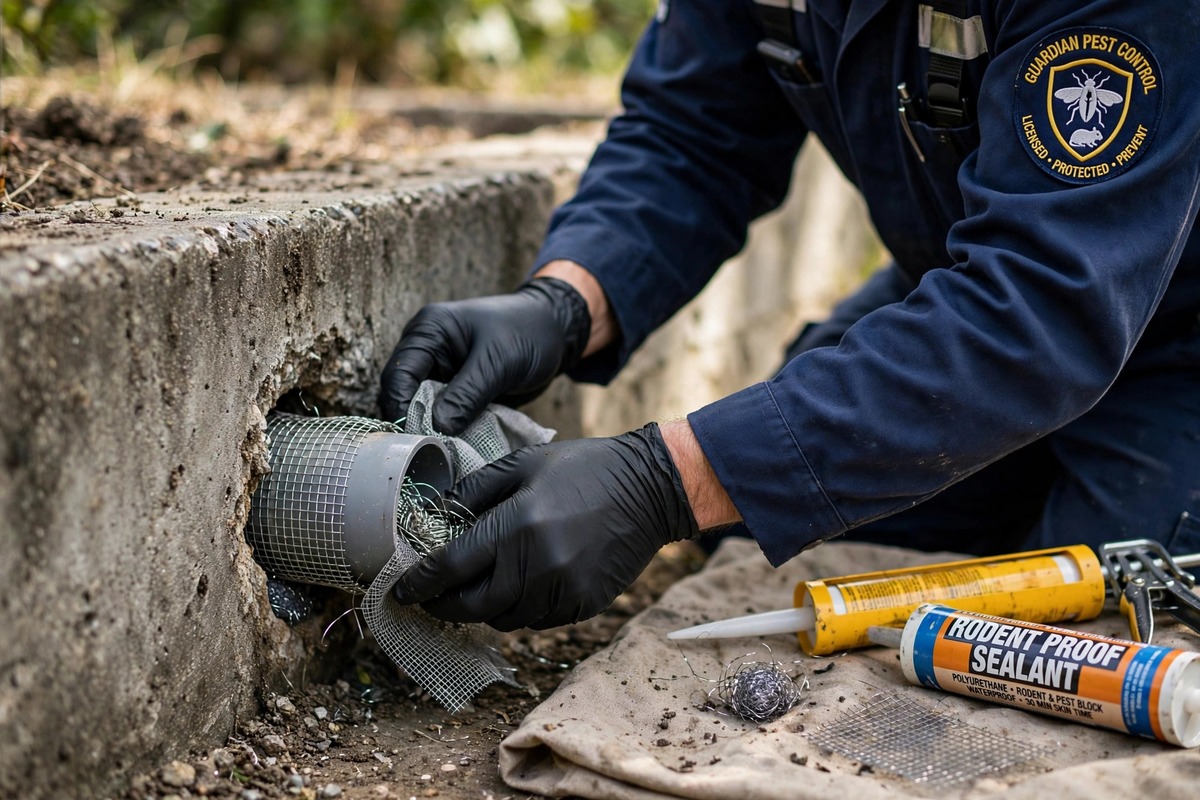
Trapping kills mice. Exclusion stops them.
Every fall we meet homeowners who have caught dozens of mice over the years — and they keep coming. Trapping is population management, not a solution: it barely dents a fast-breeding colony, and every empty trap makes room for the next mice through the same gaps.
Exclusion removes their way in instead of fighting the mice inside: a mouse squeezes through a 1/4-inch gap, a rat through 1/2 inch, and your home has dozens you walk past daily. A proper exclusion starts with a full-envelope inspection — foundation, siding, soffits, garage, roofline, utility penetrations — then seals every one with materials rodents can't chew through, and traps out what's already inside.
Hearing Scratching in the Walls? Get a Free Inspection
We'll find the entry points, trap out what's inside, and seal the envelope — one program, done for good.
(973) 653-8456Tap to call nowThe entry points NJ homes actually have
Across hundreds of North Jersey exclusions, the same entry points come up:
- Foundation gaps and cracks — settling cracks, sill-plate gaps, and missing mortar in older stone or block foundations.
- Utility penetrations — where gas, water, AC, and cable lines enter. The hole is almost always cut bigger than the pipe.
- Garage doors — worn weather seals leave mouse-sized gaps. A garage is a rodent staging area: one more gap into the house.
- Roof junctions — gaps at the eaves, roof-to-wall intersections, and dormer junctions, which roof rats, squirrels, and mice all exploit.
- Basement windows and bulkheads — rusted frames, cracked panes, and bulkhead doors that no longer sit flush.
In Hackensack and Paterson, we regularly find 15–25 entry points on a single early-1900s home — newer homes have fewer, but utility penetrations and garage seals fail everywhere.
What we seal with (and what doesn't work)
- Steel wool and copper mesh — packed into gaps. Rodents can't chew through it, and it won't rust out.
- 1/4-inch hardware cloth — galvanized metal mesh screwed over vents and larger openings. Mesh size matters: 1/2-inch lets young mice through.
- Exterior-grade sealant and mortar — over the packed mesh for a weather-tight, permanent seal.
- New door sweeps and garage seals — brush sweeps on exterior doors; fresh weather seals on garage doors.
We never rely on expanding spray foam alone — rodents chew right through it. Foam works as a backing behind mesh, never as the barrier itself.
Why NJ's older housing stock is so vulnerable
Pre-war homes in Newark, Passaic, and Elizabeth have stone or block foundations with crumbling mortar, settled sill plates, and utility holes nobody sealed back up. Additions and enclosed porches create unflashed roof junctions, and converted multi-family homes stack it all across three units sharing walls.
That's why the fall mouse invasion hits the same houses every October.
When to schedule it
The ideal window is late summer through early fall — seal the envelope before the first cold snap. But exclusion works year-round: if you're already seeing droppings, the current population gets trapped out first, then everything gets sealed.
The bottom line
If you've trapped mice for years and they keep coming back, the traps aren't the problem — the gaps are. Exclusion ends the cycle: inspect the envelope, seal every entry with chew-proof materials, trap out what's inside.
Ready to Seal Them Out for Good?
Free inspection, firm quote before work starts, and follow-up visits across North Jersey.
(973) 653-8456Tap to call nowRodent Exclusion FAQs
What is rodent exclusion?
Rodent exclusion is the permanent sealing of every entry point mice and rats use — foundation gaps, utility penetrations, garage door gaps, roof junctions — with materials they can't chew through, like steel wool, hardware cloth, and sealant.
Does rodent exclusion really keep mice out for good?
When done thoroughly, yes. A mouse needs only a 1/4-inch gap and a rat only 1/2 inch, so a proper exclusion seals the entire building envelope — paired with trapping out what's already inside, it breaks the cycle permanently.
What materials are used to seal rodent entry points?
Steel wool and copper mesh packed into gaps, 1/4-inch hardware cloth over vents and openings, exterior-grade sealant and mortar for cracks, and new door sweeps. Never expanding foam alone — rodents chew right through it.
When is the best time to rodent-proof a house in NJ?
Late summer and early fall, before the first cold snap — but exclusion works year-round. Already seeing mice? Trap out the current population and seal immediately.
How much does rodent exclusion cost in NJ?
Most single-family homes run $300–$800 depending on size and entry points; larger buildings cost more. Our NJ pricing guide covers typical costs — cheaper than paying for trapping visits every fall for the rest of your life.