NJ Pest Guard Blog · Updated September 2026
Overnight Lows Are Dropping Into the 50s — North Jersey's Mice Are Already Moving Inside. Here's How to Keep Them Out.
Short answer: overnight lows in the mid-50s this weekend are the trigger that pushes field mice and rats indoors every September — and the September 13 flood already flushed burrows and storm drains, sending surviving rodents toward dry houses. Walk your perimeter and seal the gaps now, before the real cold snap in October.
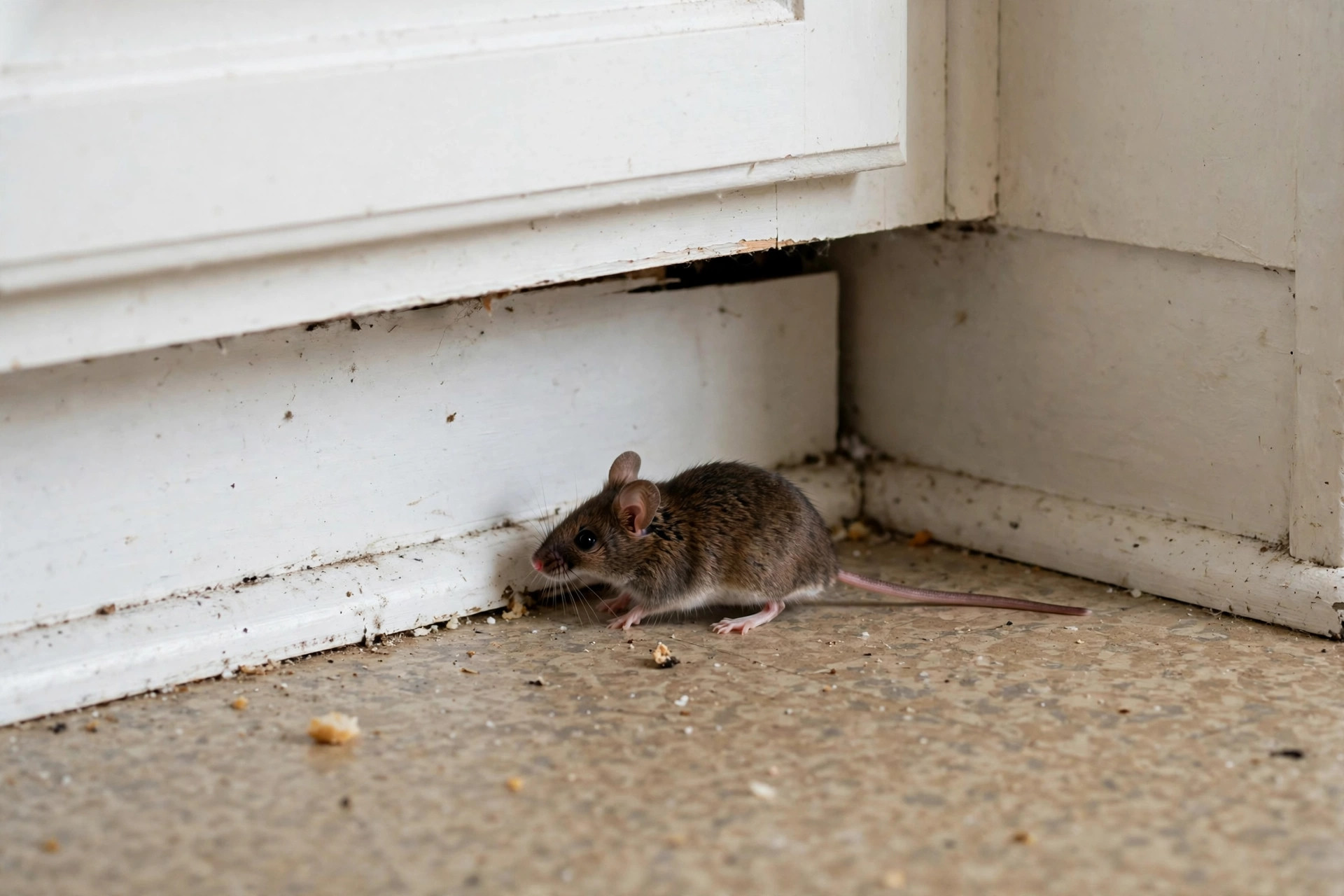
I've been in basements all over Paterson, Clifton, and Passaic this month, and I can tell you exactly what time of year it is: the temperature just dropped, and the mice got the memo.
Here's what's happening. Field mice spend the summer living it up outside — in overgrown lots, wood piles, garden beds, those weedy strips along the railroad tracks. But the minute overnight temperatures start falling into the 50s, their survival math changes. Cold ground plus scarce food equals one decision: get inside. The National Weather Service has lows in the mid-50s for our area this weekend, with highs stuck in the 60s. That's the trigger. It happens every single September, right on schedule.
But this September has an extra ingredient: the flood.
The Flood Flushed Them Toward Your House
On September 13, a stalled front parked over Bergen and Passaic counties and dropped close to 5 inches of rain in about three hours. It was a once-in-a-generation deluge — the state climatologist said so. It flooded streets, basements, and storm drains. What people don't talk about is what it did to the rodents.
Mice, rats, and voles live in burrows, under decks, in storm drains and culverts. When those fill with water, everything that survives has to go somewhere dry — and the closest dry structure with food and warmth is your house. I've seen this pattern after every bad flood: a wave of rodent calls starts about a week to ten days later. We're right in that window now.
So you've got cooling nights pushing rodents indoors and floodwater that already pushed a bunch of them your direction. That's a double hit. And they only need an opening the size of a dime.
Seal the House Before They Move In
Free rodent inspection — we find every entry point mice are using and get your home sealed before the October cold snap.
(973) 653-8456Tap to call nowThe Five-Minute Perimeter Walk
You don't need a ladder or tools for most of this. Walk around your house and look for:
- Gaps where utilities enter the house. The gas line, the AC lineset, cable wires, dryer vents. If the seal around them is cracked, dried out, or was never sealed in the first place, that's a mouse highway. Stuff gaps with steel wool or copper mesh and seal over it with exterior caulk.
- The garage door. The rubber sweep at the bottom of garage doors wears out and curls. Mice walk right under it, live in the garage for a week, then find the interior door into the house. If you can see daylight under your garage door, so can a mouse.
- Foundation cracks and basement windows. Old stone and block foundations around here settle and crack. Basement window wells collect leaves and become perfect shelter. A crack you can stick a pencil into is big enough for a mouse.
- Doors that don't sit tight. Exterior doors with worn weatherstripping, screen doors that don't latch, bulkhead doors on older homes. Mice squeeze under doors like they were designed for it — because they were.
- Food outside. Pet food left on the deck. The grill nobody cleaned since July. Bird feeders (I love them too, but know what you're doing). Fruit on the ground under a backyard tree. You're feeding the scouting party before they ever reach the door.
Signs They're Already Inside
Most homeowners don't see the mouse — they see the evidence. Scratching or skittering noises in the walls or ceiling at night, especially after the house goes quiet. Small, dark droppings the size of grains of rice in pantries, under the sink, behind the stove. Chewed corners on cereal boxes and dog food bags. A weird musty or ammonia smell in a closet. The dog standing in the kitchen staring at the baseboard for no reason — trust the dog.
One thing I tell every customer: don't just put out a few traps and call it done. Traps catch individuals; they don't fix the entry points. A house with open gaps is a revolving door — you catch three mice, five more move in. Seal first, then deal with the ones inside. Our mice removal guide walks through the full process for NJ homes.
And take the gnawing seriously. Mice chew constantly — it's how they keep their teeth worn down — and they love electrical wiring. I've pulled apart basement junction boxes in Garfield and Elmwood Park where mice had stripped wire insulation clean off. That's a fire hazard, not just a nuisance.
Hearing Scratching at Night?
A professional inspection finds the entry points you missed — usually up high, where nobody thinks to look — and clears the interior population so you can start fresh with a sealed house.
(973) 653-8456Tap to call nowWhen to Call It In
If you're hearing scratching in multiple rooms, finding droppings in the kitchen, or you've been trapping mice for weeks and they keep coming — the house isn't sealed, and you're fighting a losing battle. A professional inspection finds the entry points you missed (there's always one you missed — usually up high, where nobody thinks to look) and gets the interior population cleared out so you can start fresh with a sealed house.
Fall is our busiest rodent season for a reason. The smart move is to rodent-proof before the cold snap in October, when the real rush starts. This weekend's 50s are the early warning. Don't wait for the 40s.
Seeing droppings, hearing scratching at night, or just want the house sealed up before the real cold hits? Call NJ Pest Guard at (973) 653-8456 for a rodent inspection in Paterson, Clifton, Passaic, and surrounding North Jersey. We'll find where they're getting in, get them out, and shut the door behind them.
Fall Rodent FAQs
Why do mice move indoors in the fall in North Jersey?
When overnight temperatures start falling into the 50s, field mice and rats lose warm shelter and easy food outside. Cold ground plus scarce food changes their survival math — they seek heated homes with pantries and garages. In North Jersey, this trigger reliably hits every September.
Can mice really get through a hole the size of a dime?
Yes. Mice can squeeze through gaps as small as a dime (about 1/4 inch) because their skeletons collapse to fit. Common entry points are cracked seals where gas, cable, and AC lines enter the house, worn garage door sweeps, foundation cracks, and exterior doors with tired weatherstripping.
Did the September 13 flood make rodents worse in North Jersey?
Yes. Close to 5 inches of rain in about three hours flooded burrows, storm drains, and culverts across Bergen, Essex, Hudson, and Passaic counties. Surviving mice and rats had to move somewhere dry — and the nearest dry structure with food and warmth is a house. A wave of rodent calls typically starts about a week to ten days after a flood.
How do I know if mice are already inside my house?
Scratching or skittering noises in walls or ceilings at night, small dark droppings the size of rice grains in pantries, under the sink, or behind the stove, chewed corners on cereal and dog-food bags, a musty or ammonia smell in a closet, or a pet fixated on a baseboard are the classic signs.
Why don't traps solve a mouse problem?
Traps catch individuals but don't fix entry points. A house with open gaps is a revolving door — you catch three mice and five more move in. Seal first with steel wool or copper mesh plus exterior caulk, then deal with the mice already inside. If scratching is in multiple rooms or traps keep filling, a professional inspection finds the entry points you missed.