NJ Pest Guard Blog · Updated September 2026
Spotted Lanternfly Control in NJ: Stopping the 2026 Swarms
Short answer: the 2026 swarms are back because spotted lanternflies keep finding tree of heaven — their preferred host — across North Jersey. Remove or treat it, scrape egg masses from fall through spring, band trunks in summer, and vacuum adults as they gather. They don't bite or sting, but their honeydew and sooty mold ruin yards, patios, and cars.
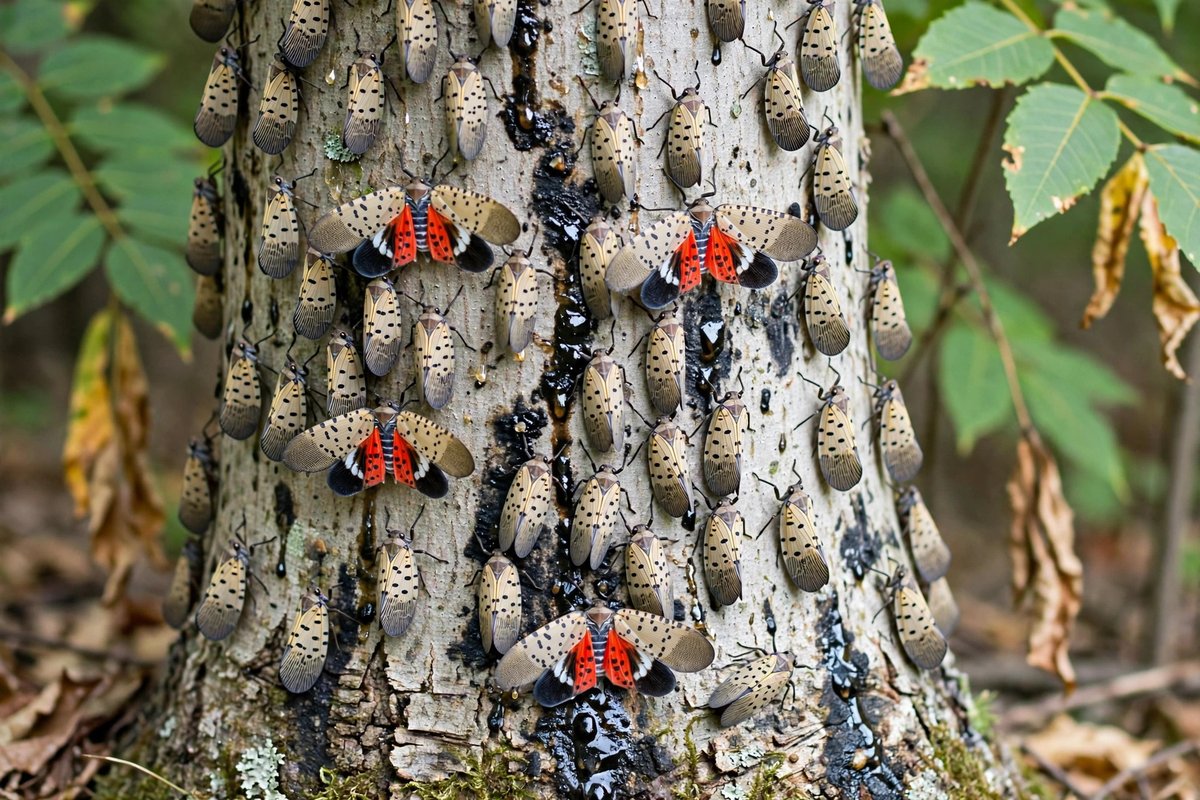
Why 2026 is another swarm year in North Jersey
The spotted lanternfly keeps thriving for a simple reason: North Jersey is full of its favorite host. Tree of heaven grows along rail corridors, the Palisades escarpment, highway edges, vacant lots, and backyard corners everywhere from Newark to Paramus. Every stand is a breeding ground, and every swarm starts there.
The cycle runs like clockwork. Nymphs hatch in spring and feed up trees and plants all summer. Adults emerge in August and gather on trunks to feed and mate. From September through November they lay mud-gray egg masses on trunks, fences, stones, and patio furniture, each holding 30 to 50 eggs. Kill a hundred adults in August and you've stopped five thousand eggs.
The tree-of-heaven trap-tree strategy
The lanternfly's love of tree of heaven can be weaponized. Remove all but one tree-of-heaven per property, treat the remaining tree with a systemic insecticide so it becomes a trap tree, and let the lanternflies gather on the one tree that kills them.
If you're removing tree of heaven yourself, do it right — cutting without treating the stump makes it sucker back tenfold. For large stands, like the Palisades ones in West New York North Bergen Secaucus and the rail edges in Jersey City, professional late-summer treatment hits adults when feeding concentrates them on trunks.
Swarms Coating Your Trunks? Get a Free Inspection
We'll map the host trees, scrape the egg masses, and set up the trap-tree strategy — across North Jersey.
(973) 653-8456Tap to call nowWhat actually works, season by season
- Spring: watch for hatching nymphs on tree of heaven, roses, and grapevines. Sticky trunk bands catch climbing nymphs — use wildlife-safe bands with guards so birds and squirrels stay safe.
- Summer: vacuum adults off trunks and branches with a shop vac; target sprays on the trunk bands and gathering spots knock down the peak adult population.
- Fall: scrape every egg mass you find from September through November with an old credit card or putty knife, dropping masses into rubbing alcohol — 30 to 50 fewer lanternflies per mass next spring.
- Winter through spring: egg masses are still visible on trunks and fence lines — keep scraping. Remove tree-of-heaven sprouts and saplings before they become staging grounds.
Still stomp or vacuum individual lanternflies on sight — it won't stop an infestation alone, but it removes adults before they lay eggs. For the full walkthrough, see our guide to finding and destroying spotted lanternfly egg masses in North Jersey.
The bottom line
Lanternflies aren't going away on their own — but yards without tree of heaven and with scraped egg masses see dramatically less pressure each year. Start at our North Jersey pest control homepage for the season-by-season plan.
Free Inspection — Build Your Swarm Plan
Same-day service, firm pricing, and trap-tree timing that hits the 2026 generation.
(973) 653-8456Tap to call nowSpotted Lanternfly Control FAQs
What does a spotted lanternfly look like at each stage?
Early nymphs are small and black with white spots; late nymphs turn red with white spots. Adults are about an inch long — gray forewings with black spots, and startling red-and-black hindwings visible in flight or when they open their wings. From September through November, adults gather on tree trunks to feed and lay eggs.
Do spotted lanternflies bite or sting?
No — they don't bite people or pets and they aren't venomous. The damage is to your trees, vines, and yard: they feed by piercing bark and excreting sticky honeydew, which grows sooty mold, attracts swarms of wasps and yellowjackets, and coats patios, cars, and outdoor furniture.
Why do lanternflies love tree of heaven so much?
Tree of heaven is the lanternfly's preferred host — both come from the same region of Asia. A stand of tree of heaven is the magnet that draws swarms into a yard or neighborhood. Removing it (or converting one tree into a treated trap tree) is the single most effective long-term step you can take.
Do sticky bands really work against lanternflies?
They work as a monitoring and suppression tool, not a cure. Sticky bands on tree trunks catch climbing nymphs and adults through summer and fall. Check bands every few days and use wildlife-safe designs — plain exposed sticky tape traps songbirds, squirrels, and beneficial insects, so use bands with protective guards or caging.
When should I call a pro for spotted lanternflies in NJ?
Call when swarms are coating trunks and patio areas, when honeydew and sooty mold are spreading, when tree-of-heaven stands are too large to remove yourself, or when you want the trap-tree strategy set up correctly. Late summer through fall is the critical treatment window.