NJ Pest Guard Blog · Updated September 2026
They Just Showed Up in Canada for the First Time — North Jersey's Spotted Lanternflies Are Laying Eggs Right Now. Here's Your 10-Minute Fix.
Short answer: on September 15, Canada confirmed its first-ever spotted lanternfly detection — the pest keeps spreading. Meanwhile, adult females across North Jersey are laying egg masses right now, and every mass you scrape off this month is 30 to 50 fewer lanternflies swarming your yard next spring. Walk your property this weekend and destroy what you find.
You might have heard: the spotted lanternfly just showed up in Canada for the first time.
On September 15, Canadian inspectors confirmed lanternflies in Windsor, Ontario — the pest's first-ever detection in Canada. Think about that for a second. This bug landed in Pennsylvania in 2014, marched through 18 states including our whole state of New Jersey, and has now officially crossed an international border. It's not slowing down. It's speeding up.
Here's the part that matters for your yard in Paterson, Clifton, Passaic, Wayne, or Hackensack: right now, this month, the adult lanternflies on your property are doing the one thing that guarantees a worse infestation next spring. They're laying eggs.
September Is Egg Season
Adult spotted lanternflies are out in big swarms right now — you'll see them clustered on trees, especially the tree-of-heaven, black walnut, maples, and willows. They look like moths with pinkish-tan spotted wings, and when they open up you see bright red underneath. Can't miss them once you know what you're looking for.
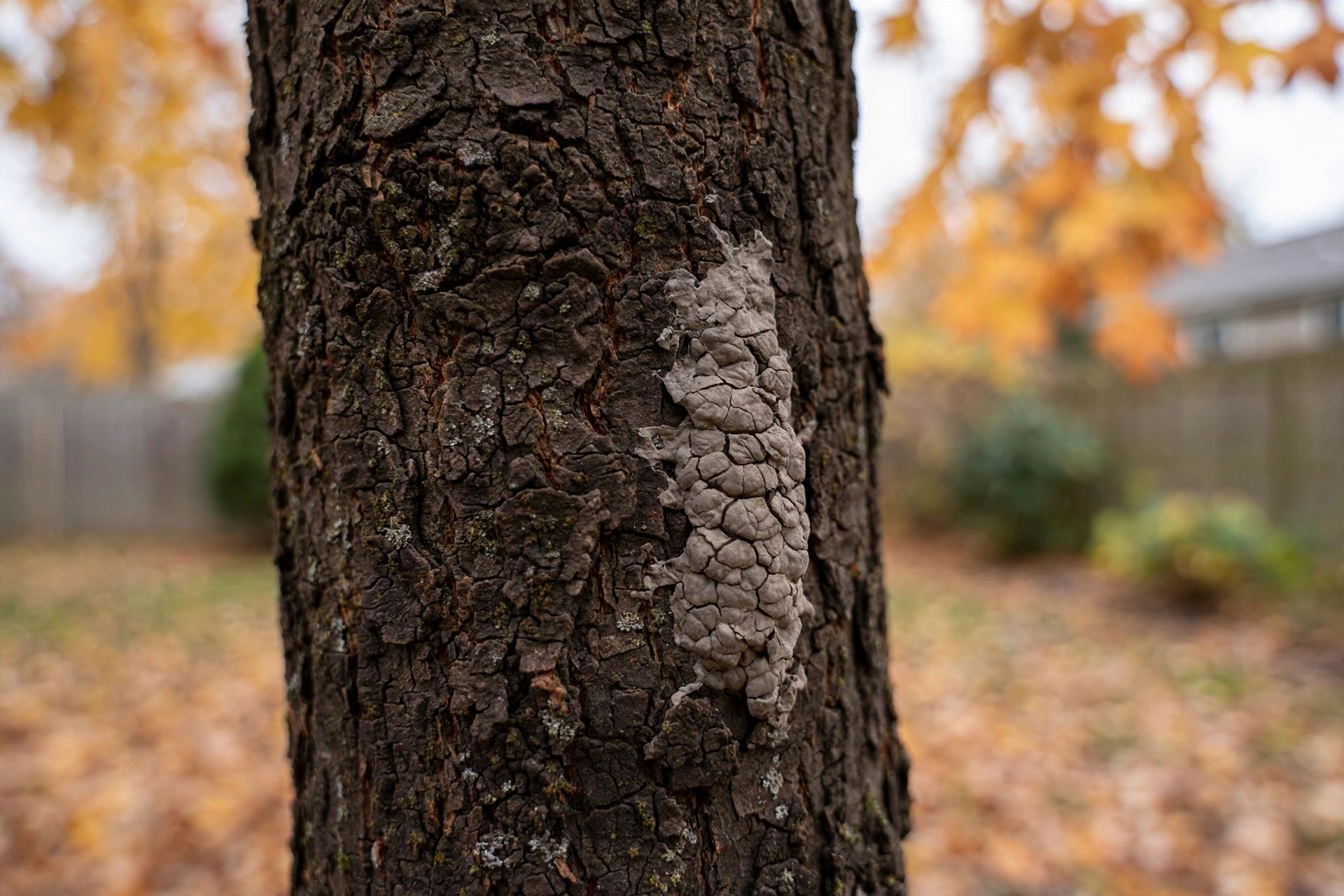
The females spend September through the first hard frost laying egg masses on just about any hard, flat surface they can find: tree bark, fence posts, patio furniture, firewood stacks, rocks, the side of your shed, even your car. Each mass holds 30 to 60 eggs. Each mass hatches 30 to 50 nymphs in the spring.
So every mud-looking smear you scrape off your fence in October is 50 fewer lanternflies swarming your yard next summer. That's the best deal in pest control: ten minutes of work now, or hundreds of bugs later.
Lanternflies Taking Over Your Trees?
Free inspection — we'll tell you straight whether you need us or just a putty knife.
(973) 653-8456Tap to call nowWhat an Egg Mass Looks Like
This is where most people mess up. Fresh egg masses look like a smear of wet gray mud, about an inch long. As they dry, they turn pinkish-brown, then get darker and cracked as the season goes on. They blend in with bark and concrete on purpose — nature's camouflage.
Walk your property this weekend and check:
- Tree trunks and big branches — especially the tree-of-heaven if you have one, the lanternfly's favorite host by a mile.
- Firewood piles — check every log before you stack or move any. Moving firewood with egg masses on it is one of the main ways this pest colonizes new neighborhoods.
- Fence posts, deck railings, and the underside of outdoor furniture.
- Your grill, your shed walls, kids' play equipment.
- Your car and truck — especially if you park near trees. Lanternflies love hitchhiking, and that's literally how they spread county to county.
Check anything you're about to move, too. Furniture, trailers, outdoor equipment — anything that sat outside this fall deserves a look before it travels.
How to Kill Them (It Takes Seconds)
Scrape the mass off into a bag with a putty knife, an old credit card, anything with an edge. Then the important part: the eggs have to actually die. Put the bag with a little rubbing alcohol or hand sanitizer in it, seal it, and squish it. Or scrape them into a container of water with dish soap. Either way, dead is dead — don't just knock them on the ground, because they'll still hatch.
Adults are even easier. Step on them. Vacuum them up. A spray bottle with water, liquid soap, and a little cedarwood oil knocks them down. And the state asks you to report sightings at badbug.nj.gov or by calling 1-833-223-2840 — it helps them track the spread.
When DIY Isn't Enough
Here's the honest part. If you've got a big tree-of-heaven on your property covered in hundreds of adults, or egg masses up in branches you can't reach, or a commercial property where this is turning into a real problem — that's beyond a putty knife and a spray bottle. Heavy infestations need professional treatment: targeted sprays on host trees at the right point in the season, and in some cases treating or removing the tree-of-heaven itself.
Also worth knowing: the honeydew these bugs excrete feeds sooty mold that turns everything under the tree black and sticky — patio furniture, cars, siding, all of it. If your backyard has started looking like someone sprayed it with syrup and ash, that's the lanternflies, and a pro can knock the population down fast.
If the lanternflies have taken over your trees, your deck, or your siding — or you want a pro to handle the egg-mass hunt and treat the host trees properly — call NJ Pest Guard at (973) 653-8456. We handle spotted lanternfly infestations across North Jersey, from single trees to whole properties, and we'll tell you straight whether you need us or just a putty knife.
Do It This Weekend
The lanternfly's spread into Canada this week is the headline, but the real story is in your backyard. September is the narrow window where one homeowner with ten free minutes can take out next year's infestation before it starts. The frost will kill the adults soon enough — but their eggs survive the winter just fine. Unless you get to them first.
(973) 653-8456Tap to call nowSpotted Lanternfly FAQs
When do spotted lanternflies lay eggs in New Jersey?
Adult females lay egg masses from September through the first hard frost in New Jersey. Every mass that survives the winter hatches 30 to 50 nymphs in spring, which makes September the one month homeowners can break next year's cycle for free.
What does a spotted lanternfly egg mass look like?
Fresh egg masses look like a smear of wet gray mud about an inch long. As they dry they turn pinkish-brown, then darker and cracked as the season goes on. They blend into tree bark, fence posts, concrete, firewood, and the sides of sheds — anywhere hard and flat.
How do you kill spotted lanternfly egg masses?
Scrape the mass into a bag or container with a putty knife or old credit card, then kill the eggs: add rubbing alcohol or hand sanitizer, seal the bag and squish it, or drop them in water with dish soap. Don't just knock them on the ground — they will still hatch.
Does New Jersey require reporting spotted lanternflies?
New Jersey asks residents to report sightings at badbug.nj.gov or by calling 1-833-223-2840. Reporting helps the state track the spread; it does not replace killing the insects or destroying egg masses yourself.
When should I call a professional for spotted lanternflies?
Call a professional when you have a heavily infested host tree — especially a tree-of-heaven — with hundreds of adults, egg masses in branches you can't reach, or a commercial property where lanternfly honeydew and sooty mold are damaging surfaces. Pros apply targeted sprays at the right point in the season and can treat or remove the host tree itself.