NJ Pest Guard Blog · Updated September 2026
Ant Control in NJ: Why Sprays Fail and Baiting Wins
Short answer: identify the species first, then bait. Sprays kill the ants you see but can scatter the colony into new ones. Odorous house ants want your kitchen; carpenter ants want your damp wood.
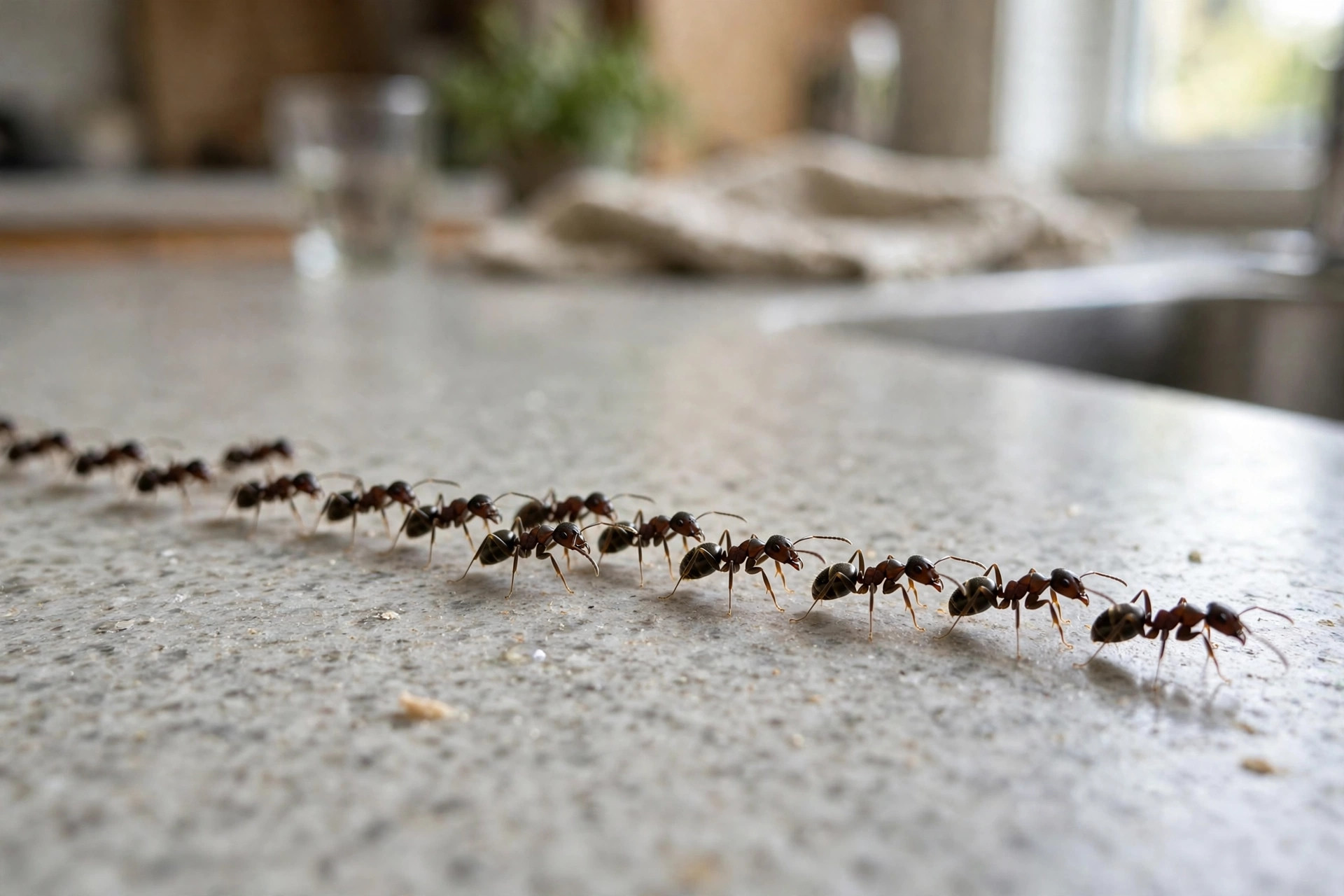
The two ants running North Jersey
- Odorous house ants — tiny, dark brown, marching in tight trails across counters. Crush one: it smells faintly like coconut. Colonies hold 100,000+ workers with multiple queens, which is why they rebound so fast after a spray.
- Carpenter ants — big, black, found near damp wood: leaky windowsills, deck posts, around bathtubs. They don't eat wood — they tunnel through it, hollowing out framing over time.
- Quick test: wings on the floor near a window in spring mean swarmers. Sawdust-like piles (frass) under baseboards mean carpenter ants are excavating right now.
Getting the species right is everything — sweet baits that wipe out odorous house ants do little for carpenter ants, which prefer protein. When we inspect homes in Paterson and Clifton, misidentified ants are the most common DIY mistake we correct.
Why sprays backfire
Repellent sprays trigger a survival response called budding: queens and workers split off into two or three satellite colonies, each with its own queen. You turned one kitchen problem into three. Sprays also contaminate the trails that bait needs — workers reroute around the chemical barrier and carry nothing home to the queen. Every spray-first homeowner in Wayne who calls us in June is paying to fix a March spray.
Ants Keep Marching Back? Get a Free Inspection
We'll ID the species, find the colony, and bait it properly — same-day service across North Jersey.
(973) 653-8456Tap to call nowBaiting strategy that actually kills colonies
- Match the bait. Odorous house ants want sweet gel baits in spring; carpenter ants usually take protein. Offer both side by side for a day and follow whichever the ants take.
- Slow kill beats fast kill. The active ingredient must be slow enough that foragers survive to feed the colony — death in 1–3 days is the sweet spot. Fast kill only decapitates foraging lines.
- Place bait on the trail, never on a sprayed surface. Pea-sized stations right where ants march — countertop edges, under the sink, along baseboards.
- Let them eat. Activity often increases for a few days after baiting — that's workers recruiting nestmates, the mechanism working. Expect results in 1–3 weeks.
Professionals add non-repellent transfer products that ants track through wall voids, plus dusts placed where colonies hide. That's how we handle the Passaic rowhomes where odorous house ants have been shuttling between apartments since April.
Fix the moisture, fix the carpenter ants
Carpenter ants are a moisture symptom wearing an insect costume. They target wood softened by water — leaking gutters, failed caulk, dripping spigots. Kill the colony without fixing the leak and next spring's swarmers move right back in. Walk the exterior: extend downspouts, recaulk trim, repair the hose bib. Anything reading consistently damp under sinks needs plumbing attention, not just pest treatment.
When to call us instead of DIY
Bait your own trail once — if it fades in two weeks, you won. Call us when: trails keep reappearing after a month, you're seeing frass or winged swarmers (carpenter ants), ants are in wall voids or ceilings, or you're in a multi-unit building where the colony probably lives next door. One-time ant treatments run $150–$400 with follow-ups included — see our NJ exterminator cost guide. We service kitchens across Newark, Jersey City, Elizabeth, Teaneck, Garfield, Paramus, and every town in between.
The bottom line
Ants are a colony problem, not a countertop problem. ID the species, skip the spray, bait slow, fix the moisture. Do that and the kitchen in Hackensack stays clean — spray first and you'll meet the same ants, doubled, by summer.
One Colony, One Treatment, Done Right
Free inspections, species-matched baiting, and follow-ups until the trails are gone across North Jersey.
(973) 653-8456Tap to call nowAnt Control FAQs
What kind of ants are in my NJ kitchen?
Most spring kitchen trails in New Jersey are odorous house ants — small, brown, smelling faintly like coconut when crushed. Bigger black ants near damp wood are usually carpenter ants, which tunnel through wood and need professional treatment.
Why do ants keep coming back after I spray them?
Sprays kill only the foragers you see while the queen keeps laying eggs, and repellents can scatter ants into multiple new colonies. Slow-acting bait lets workers carry poison back to the queen, wiping out the whole colony.
How long does ant baiting take to work?
Small colonies collapse in 1 to 2 weeks as foragers carry bait home. Large outdoor colonies and carpenter ants can take 3 to 4 weeks. A brief increase in activity after baiting starts means workers are feeding — let them eat.
Are carpenter ants dangerous to my house?
They don't eat wood, but they tunnel through it — and over years that hollows out sills, deck posts, and framing, especially where wood is damp from leaks. Frass piles and winged swarmers indoors are signs to act on fast.
How much does ant control cost in NJ?
A one-time ant treatment in North Jersey typically runs $150 to $400 depending on species and severity, with follow-ups included if the colony persists. NJ Pest Guard inspections are always free.