NJ Pest Guard Blog · Updated September 2026
Wasp Nest Removal in NJ: Stay Away From That Eave
Short answer: every NJ wasp nest is one of three things — open paper wasp nests under eaves, football-shaped hornet nests in trees, or underground yellow jacket nests. DIY goes wrong when people misjudge which one they have.
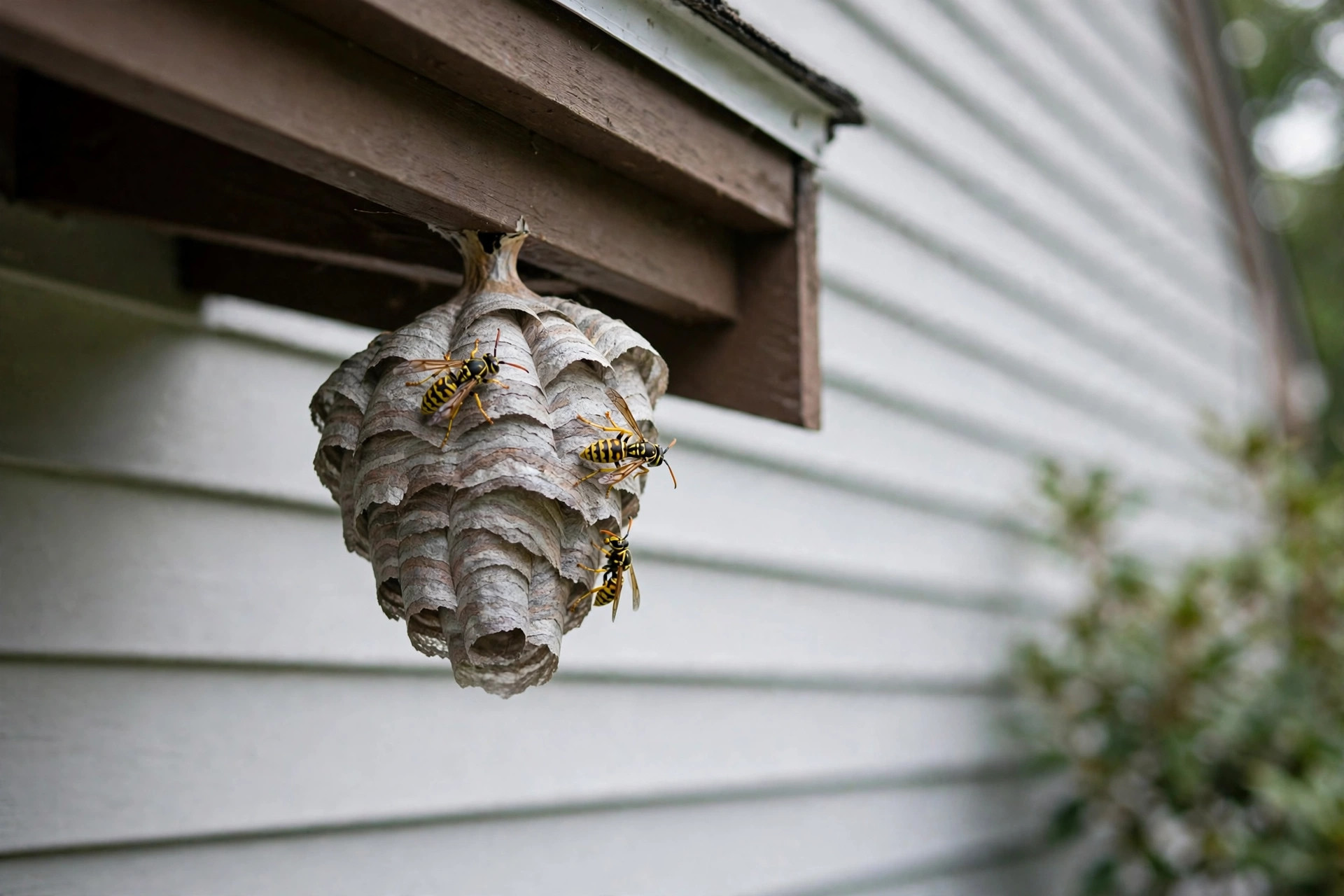
Nest types you'll find in North Jersey
- Paper wasps — small open-comb nests under eaves, deck rails, and porch ceilings. Mild-mannered until disturbed, but they'll defend the nest hard.
- Bald-faced hornets — large gray "footballs" of paper in trees and shrubs. Aggressive defenders; Wayne and Paramus nests can hold 700+ hornets by August.
- Yellow jackets — the worst actors. They nest underground (one busy hole in the lawn) or in wall voids, with hundreds of workers that sting repeatedly.
- Mud daubers — harmless mud tubes on siding. Rarely sting, don't defend nests. Leave them alone.
Heavy traffic at a single hole in the ground or a siding crack is the tell for the dangerous ones. Watch from a safe distance: a steady stream of yellow-and-black means yellow jackets, and the nest behind it is bigger than you think.
Why DIY removal is genuinely dangerous
Spraying an exposed nest in daylight hits only surface workers — the bulk of the colony is inside, and now they're furious. Wasps sting repeatedly, release alarm pheromones, and follow movement. The hidden nests are worst: yellow jackets in wall voids and underground. Disturb a 3,000-worker ground nest the wrong way and you're looking at dozens of stings — an ER visit even without an allergy. Night-only rule, proper gear, and knowing when the nest is too big are non-negotiable.
Wasp Nest on Your Home? Don't Touch It
We'll ID the species and remove it safely — same-day service across North Jersey.
(973) 653-8456Tap to call nowLate summer: why they're so aggressive now
By August, colonies hold hundreds of workers while natural food runs low and the queen stops laying — so everyone pivots to scavenging your cookout. They're also defending five months of colony investment: guards respond faster and in greater numbers near the entrance. Lawnmowers, hedge trimmers, and curious kids are the classic triggers. If wasps swarm every time you open the grill, there's a nest within about 100 feet — check eaves, the shed, and ground holes.
What professional removal looks like
- Evening appointment. We treat at dusk or later, when foragers are home and the full colony is present.
- Species-matched treatment. Exposed nests get a long-reach aerosol; ground nests get dust in the entrance; wall-void nests get treated through a small drilled hole so the colony dies inside the wall.
- Nest removal after treatment. Once activity stops (24–48 hours), we remove the nest — leftover pheromones attract next year's queens to the same spot.
- One visit, guaranteed. Most NJ wasp jobs take about an hour, and the backyard is usable the next day. See what an exterminator costs in NJ.
We pull hornet nests out of Teaneck maples and yellow jacket nests out of Hackensack retaining walls every August.
Prevention: stop next spring's nests
Queens reuse successful nest sites. Seal soffit and siding gaps, cap unused vents, keep trash lidded and rinsed, and fix dripping outdoor spigots — wasps need water. A preventive residual on eaves and deck undersides in early spring stops queens before they build. Skip the decoy nests; exclusion beats gimmicks. We offer spring preventive treatments across Newark, Jersey City, Elizabeth, Garfield, Paterson, and Passaic — one early visit is cheaper than a late-summer removal.
The bottom line
Small exposed paper wasp nest, full protective gear, nighttime, right product — the only DIY scenario worth considering. Everything else is a one-visit professional job. The stings you avoid are worth more than the money you save.
One Evening Visit, Nest Gone
Free inspections, guaranteed removal, and a safe backyard by tomorrow across North Jersey.
(973) 653-8456Tap to call nowWasp Nest Removal FAQs
How can I tell a wasp nest from a hornet nest?
Paper wasps build small open-comb nests under eaves and deck rails. Bald-faced hornets build large gray football-shaped paper nests in trees and shrubs. Yellow jackets nest underground or in wall voids, with heavy traffic at a single ground entrance.
Why are wasps so aggressive in late summer in NJ?
By August, colonies peak at hundreds of workers, natural food runs low, and the queen stops laying — so workers switch to scavenging your food. They're hungry, numerous, and far more defensive of the nest.
Is it safe to remove a wasp nest myself?
Small, exposed paper wasp nests can sometimes be handled at night with protective gear and the right spray. Enclosed nests in wall voids, large hornet nests, and underground yellow jacket nests are genuinely dangerous — disturb them wrong and hundreds of stinging insects pour out.
What does professional wasp nest removal look like?
We identify the species and nest location, then treat with targeted dust or aerosol — usually in the evening when the colony is home — and remove the nest after activity stops. Most jobs are done in one visit with a guarantee.
How do I stop wasps from nesting at my NJ home?
Seal soffit and siding gaps, cap unused vents, keep trash lidded and rinsed, fix leaky outdoor spigots, and treat eaves and deck rails with a residual in early spring before queens establish nests. Exclusion works better than decoy nests.