NJ Pest Guard Blog · Updated September 2026
Sunday's Flood Is About to Turn Into North Jersey's Worst Mosquito Surge of the Season
Short answer: the September 13 flood filled every backyard nursery in Bergen and Passaic counties with standing water, and mosquitoes go from egg to biting adult in about a week in this heat. The next seven to ten days are the window — dump, drain, and treat now, or spend October getting eaten alive. West Nile is already active in the state.
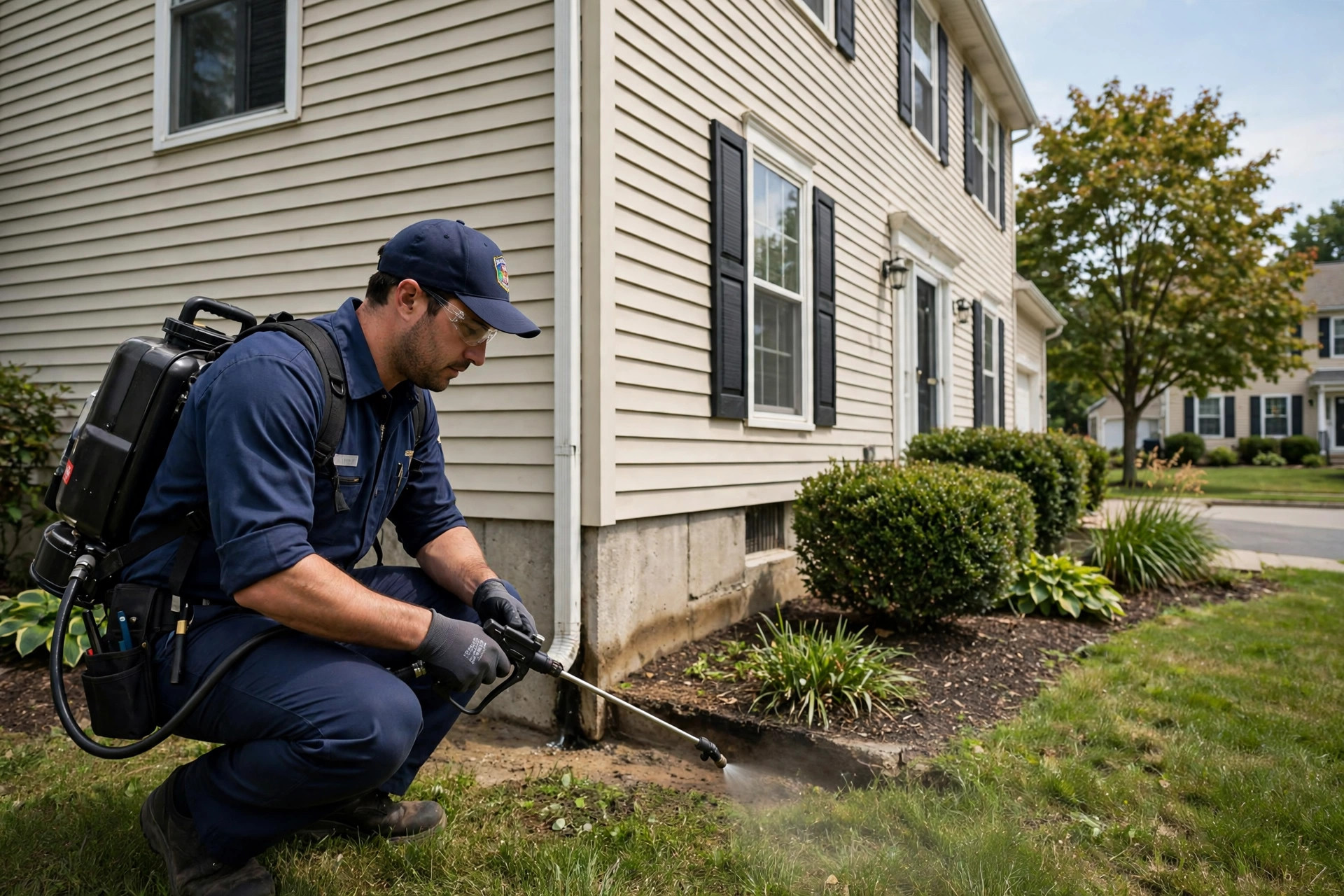
Sunday's flood filled every backyard nursery
Sunday morning's flood is over. The mosquitoes it created haven't arrived yet — but they're coming, and they'll be the worst of the season.
Between roughly 7 and 10 a.m. on September 13, a stalled front dumped close to 5 inches of rain on Bergen and Passaic counties in about three hours. Paterson, North Haledon, Little Falls, Haworth, Fair Lawn, Garfield, Ridgewood, Paramus — flash flood warnings stretched across the whole area, with 20 water rescues in Paterson alone. The state climatologist called it at least a once-in-a-generation event.
Here's what nobody's talking about: all that water didn't just flood basements and roads. It filled every flowerpot, kiddie pool, clogged gutter, bucket, wheelbarrow, and tarp in North Jersey. And standing water is where mosquitoes are born.
Why this flood means mosquito trouble
A mosquito can go from egg to biting adult in about a week to ten days in warm weather. Thursday's forecast high is 84 degrees — exactly the kind of heat that speeds up that cycle. Every puddle, saucer, and gutter left holding water after Sunday's rain is a nursery right now.
And the particular mosquito that's taking over North Jersey yards is the Asian tiger mosquito — small, black-and-white, and nasty. Bergen County mosquito control has already warned that it's the biggest nuisance in the county this year, and it doesn't need a pond. Half an inch of water in a toy, a planter, or a clogged gutter is enough for it to breed.
This isn't just about itchy ankles, either. Monmouth County is spraying three towns today — September 15 — because West Nile virus was detected in local mosquito pools. Across New Jersey, 84 mosquito pools have tested positive for West Nile this year. Bergen County has already warned of a spike in West Nile-carrying mosquitoes in its own backyard.
Don't Wait for the Bite Wave
Free mosquito assessment — we find every breeding site on your property and treat before the larvae hatch.
(973) 653-8456Tap to call nowWhat to do this week (before they hatch)
The next seven to ten days are the window. Whatever water is still sitting around your house right now is producing the mosquitoes you'll be swatting in October. Walk your property and:
- Dump everything. Flowerpot saucers, buckets, toys, tarps, wheelbarrows, pet bowls — tip them all. Then tip them again after the next rain. Sunday's forecast calls for more rain (60% chance), so this is a repeat chore.
- Clean your gutters. Clogged gutters are the number-one hidden breeding site in North Jersey, and after a storm like Sunday's, yours are packed with leaves and standing water. If water isn't draining, they're mosquito condos.
- Check pool and grill covers. Water sitting on a pool cover is prime breeding territory. Drain or treat it.
- Fix your screens. Mosquitoes get in through torn window and door screens. Give them a quick look before the wave hits.
- Treat what you can't dump. If you have a rain barrel, a pond, or anything that has to hold water, mosquito dunks work — but you have to replace them on schedule. Forget, and the bucket becomes the breeding ground.
County spraying only covers specific areas and only knocks down the adults flying right now. It doesn't treat your yard, and it doesn't touch the larvae waiting in your gutters. Homes in Wayne and Clifton with low-lying yards and older drainage are the ones where standing water lingers longest after a storm like this.
When it's bigger than a weekend cleanup
If your property took on water Sunday — and thousands of Bergen and Passaic county homes did — a DIY walk-through only goes so far. Flood debris piles up against foundations, downspouts wash out, low spots in the yard turn into permanent puddles, and clogged catch basins keep refilling. That's the kind of yard that breeds mosquitoes week after week until the first hard freeze.
A professional mosquito treatment hits the places you can't reach — the shaded fence lines, the under-deck areas, the tall grass and brush where adults rest during the day — and treats the standing water so larvae never hatch. One yard treated properly this week can break the cycle for your whole block.
Break the Cycle This Week
One professional treatment before the larvae hatch protects your yard — and your whole block — for the rest of the season.
(973) 653-8456Tap to call nowDon't let the flood's second wave bite you
Sunday's storm wrecked basements, totaled cars, and closed roads. Don't let its aftershock — the mosquito surge — make the rest of your fall miserable.
If standing water turned your yard into a breeding ground, call NJ Pest Guard today. We treat North Jersey homes across Bergen, Passaic, Essex, and Hudson counties — one visit now, before the larvae hatch, makes all the difference. Your yard should be a place to sit outside in the evening, not a place to get eaten alive.
Flood Mosquito FAQs
Will the September 13 flood cause a mosquito surge in North Jersey?
Yes. Close to 5 inches of rain filled flowerpot saucers, buckets, tarps, clogged gutters, and low yard spots across Bergen and Passaic counties with standing water. Mosquitoes go from egg to biting adult in about a week to ten days in warm weather, so the surge from the flood is expected roughly one to two weeks after September 13.
How fast do mosquitoes hatch after a flood in warm weather?
About a week to ten days from egg to biting adult when temperatures are warm. With highs forecast near 84 degrees the week after the flood, the development cycle runs at its fastest. Any standing water left sitting now is producing the mosquitoes you will be swatting in October.
What is the Asian tiger mosquito and why is Bergen County warning about it?
The Asian tiger mosquito is a small black-and-white daytime biter that has become the biggest mosquito nuisance in North Jersey. It needs as little as half an inch of standing water — a toy, a planter, a clogged gutter — to breed. Bergen County has warned of a spike in West Nile-carrying mosquitoes this season, and statewide 84 mosquito pools have tested positive for West Nile in 2026.
Does county mosquito spraying treat my yard?
No. County spraying only covers specific areas and only knocks down the adults flying right now. It does not treat your yard, your gutters, or the larvae waiting in standing water on your property. Monmouth County's September 15 spraying in Keansburg, Holmdel, and Hazlet targets public areas after West Nile was detected, not private yards.
When should I call a professional for mosquito control after the flood?
Call if your property took on water during the flood, if debris piles up against your foundation, if low spots in your yard hold standing water, or if downspouts and catch basins keep refilling. A professional treatment hits shaded fence lines, under-deck areas, and tall brush where adults rest, and treats standing water so larvae never hatch, breaking the cycle for your whole block.