NJ Pest Guard Blog · Updated September 2026
Winter Pest Control in NJ: What Moves Indoors When It Gets Cold
Short answer: mice are the main event, they push indoors in fall and breed all winter. Stink bugs, boxelder bugs, and cluster flies overwinter in attics and wall voids, emerging on warm days. The fix is September and October exclusion: seal the gaps now, and winter stays quiet.
The fall invasion sets up the winter problem
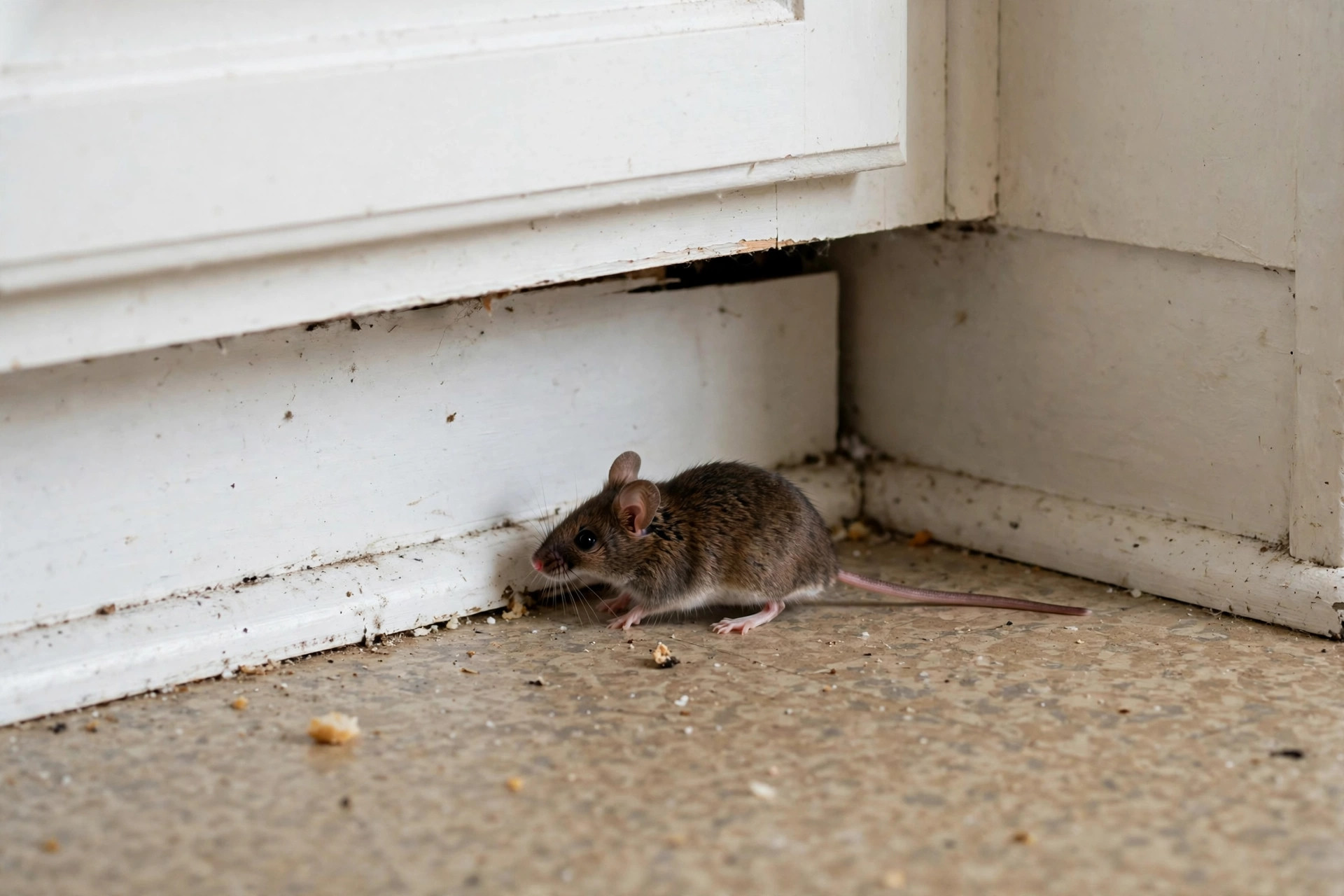
Winter pests do not arrive in January. They arrive in September and October, when the first cool nights send rodents scouting for warm shelter. A mouse that moves into your wall void in October will still be there in February, and by then it will not be alone. Understanding that timeline is the whole game: winter pest control is really fall pest control, done before the first sustained cold snap.
In North Jersey, rodent pressure starts as overnight lows dip into the 40s, usually late September into October. Homes near wooded lots, streams, and older neighborhoods in Wayne, Paramus, and Teaneck feel it first, but no house is immune. A mouse fits through a hole the size of a dime, and your home has dozens of them.
Which pests actually move in for winter
- House mice are the number one winter pest, period. They move in during fall, nest in wall voids and attics, and breed straight through winter. Scratching in the walls at night and droppings in the pantry are the classic signs. Our mice removal guide covers the full playbook.
- Norway rats, less common than mice but a bigger problem where they show up: near restaurants, alleys, and older housing stock in Newark, Paterson, and Jersey City. They burrow under foundations and enter through gaps rats can widen with their teeth.
- Brown marmorated stink bugs, they cluster on sunny siding in fall, slip through window and door gaps, and spend winter in attics. A warm January day wakes them and they wander into living spaces.
- Boxelder bugs and cluster flies, same story: fall entry, winter shelter in wall voids, surprise appearances on warm days. Harmless but maddening in numbers.
- Spiders, they follow the food. Fall insect traffic around the foundation draws them into basements and garages, where they settle in for winter.
Seal Them Out Before the First Freeze
Free fall exclusion inspection, we find every entry point and seal it before rodents move in for winter.
(973) 653-8456Tap to call nowThe entry points to seal NOW
Walk your home's exterior in September with a critical eye. Every one of these is a mouse door:
- Foundation gaps and cracks, check where the foundation meets the siding, and around basement windows. Seal with copper mesh or steel wool plus sealant, not foam alone (mice chew through foam).
- Utility line penetrations, where pipes, cables, and the AC line enter the house. These are the most-missed entry points we find on inspections.
- Door gaps, install door sweeps on exterior doors and the garage-to-house door. If you can see daylight under a closed door, a mouse can walk under it.
- Garage doors, worn bottom seals leave a gap along the whole width of the door. Replace flattened or chewed seals before fall.
- Vents and chimneys, cap the chimney and screen attic and crawlspace vents with quarter-inch hardware cloth.
- Window and door frames, the gaps stink bugs and boxelder bugs use. Caulk the exterior trim before they start clustering.
Yard work matters too: move firewood 20+ feet from the house (woodpiles are mouse condos), trim tree branches back from the roofline, and clear leaf litter and clutter away from the foundation. In Clifton and Passaic, overgrown foundation plantings are the number one thing we flag on fall inspections.
Why traps alone fail
Traps catch mice. They do not stop mice. If the entry points are still open, new mice keep arriving to replace the trapped ones, and the cycle runs all winter. We see it every year: a homeowner buys two dozen snap traps in November, catches mice through December, and calls us in February when the pantry is still getting hit.
Lasting rodent control has a fixed order of operations:
- 1. Exclusion first: seal every entry point so no new mice arrive.
- 2. Trap the residents, snap traps (not glue boards, not poison indoors) placed along walls where mice travel, to remove the ones already inside.
- 3. Remove attractants, pantry goods in sealed containers, pet food picked up at night, no accessible garbage.
- 4. Monitor, keep a few traps set through winter as an early-warning system.
Skip step one and the other three are a treadmill. Our NJ exterminator cost guide breaks down what professional exclusion and rodent control actually costs versus a winter of DIY trap-buying.
What about the overwintering bugs?
Stink bugs, boxelder bugs, and cluster flies do not breed indoors and do not damage your home. They are a nuisance, not a threat, and pesticides inside are the wrong answer. What works:
- Vacuum, don't crush, crushing stink bugs releases the smell that gives them their name and can stain walls. A handheld vacuum with a stocking over the nozzle does the job.
- Seal for next year, every gap you close this fall is one fewer bug next winter. This is a multi-year game; each sealed season shrinks the invasion.
- Exterior treatment in late summer, a preventive barrier applied to sunny siding in August and September, when the bugs start clustering, cuts fall entry dramatically. Too late for this year? Put it on the calendar for next August.
When to call a pro
Call when any of these are true: you are catching mice faster than you can keep up, you hear gnawing or scratching in walls (not just attics), you find droppings in food areas, you see rats or rat-sized burrows outside, or exclusion feels beyond a weekend project. Rodents chew wiring and contaminate food; a two-month-old infestation costs more to fix than a September inspection. Homes in Garfield, Elizabeth, and Hackensack with older foundations are the ones where professional exclusion pays for itself fastest.
Winter Is Coming. Get Ahead of It.
Free fall inspection and exclusion quote, same-week appointments across North Jersey before the cold sets in.
(973) 653-8456Tap to call nowThe bottom line
September and October are exclusion months. Seal the foundation gaps, utility penetrations, and door gaps now; trap what is already inside; store firewood away from the house. Do that, and winter in New Jersey is the quiet season it is supposed to be instead of the scratching-in-the-walls season nobody wants.
Winter Pest FAQs
What pests come inside NJ homes in winter?
House mice are the number one winter pest. They move indoors in fall and breed through winter. Norway rats follow where food and shelter are easy. Overwintering insects like brown marmorated stink bugs, boxelder bugs, and cluster flies shelter in attics and wall voids, then wander out on warm winter days.
When should I seal my home against winter pests in NJ?
September and October, before the first sustained cold snap. Rodents start scouting for winter shelter as nights drop into the 40s. Seal foundation gaps, utility line penetrations, and door gaps with steel wool, copper mesh, or sealant, and install door sweeps. Once mice are inside and nesting, exclusion gets much harder.
Why do I see stink bugs in my house in the middle of winter?
They are not coming in from outside in January. They got in back in fall and have been sheltering in your attic or wall voids. A warm sunny day wakes them, and they wander toward light and heat. Vacuum them up instead of crushing them, and focus on sealing the gaps they used to enter so next fall's invasion is smaller.
Do I still need pest control in winter in New Jersey?
Yes. Mice breed all winter indoors, and an ignored fall invasion becomes a full infestation by February. Winter is also the best time to plan: monitoring visits catch problems early, and booking spring services now beats the March rush.
Can I get rid of mice with traps alone?
Rarely, for more than a few days. Traps catch individuals but do nothing about the entry points, so new mice keep arriving. Lasting mouse control is exclusion first, seal every dime-sized gap, then trapping to remove the ones already inside. Skip one step and the cycle repeats.